A Tale of Three Technologies
This talk draws inspiration for its title from Dickens' classic A Tale of Two Cities, as I believe that with AI, it is both the best and worst of times for design. Drawing on Hebbia's George Sivulka's account of textile-factory electrification, lessons from foodpanda's data-native operations, and the story of building a conference app with little more than English prompts, this talk asks what these parallels mean for service designers today. Beyond converging job titles, there is a deeper opportunity: understanding & harnessing the human interfaces -- the intersections between people, organizations, and AI agents, in a world that is becoming increasingly permissionless.
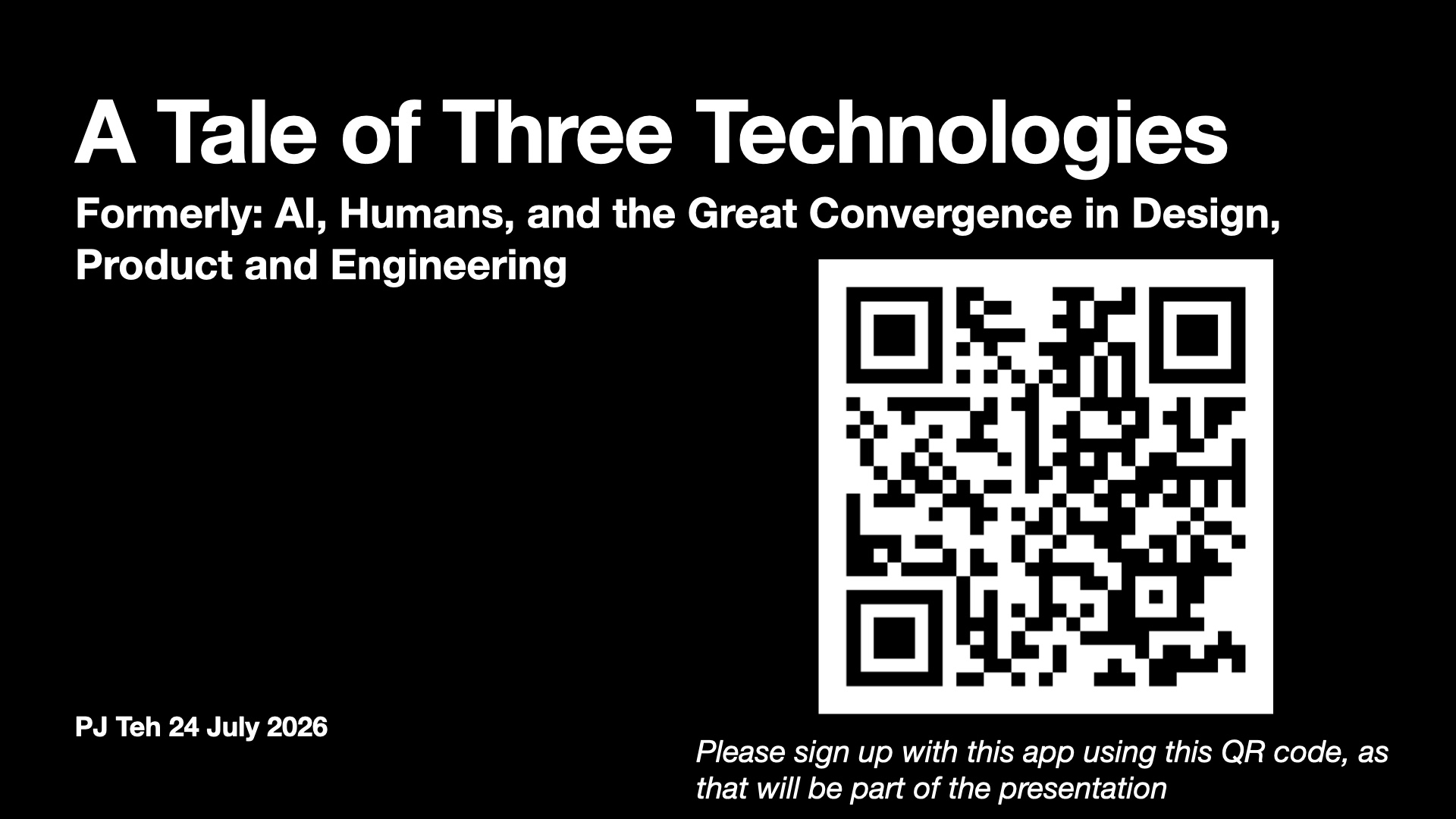 | Morning everyone, welcome to this talk! I know you signed up for the talk titled “AI, Humans and the Great Convergence in Design, Product and Engineering”, but the more I thought about it, the more I felt it is better to rename the talk as “A Tale of Three Technologies”… # |
 | … with apologies to Charles Dickens. But I really think that the opening passage of “A Tale of Two Cities” is a perfect description of our modern AI era. # |
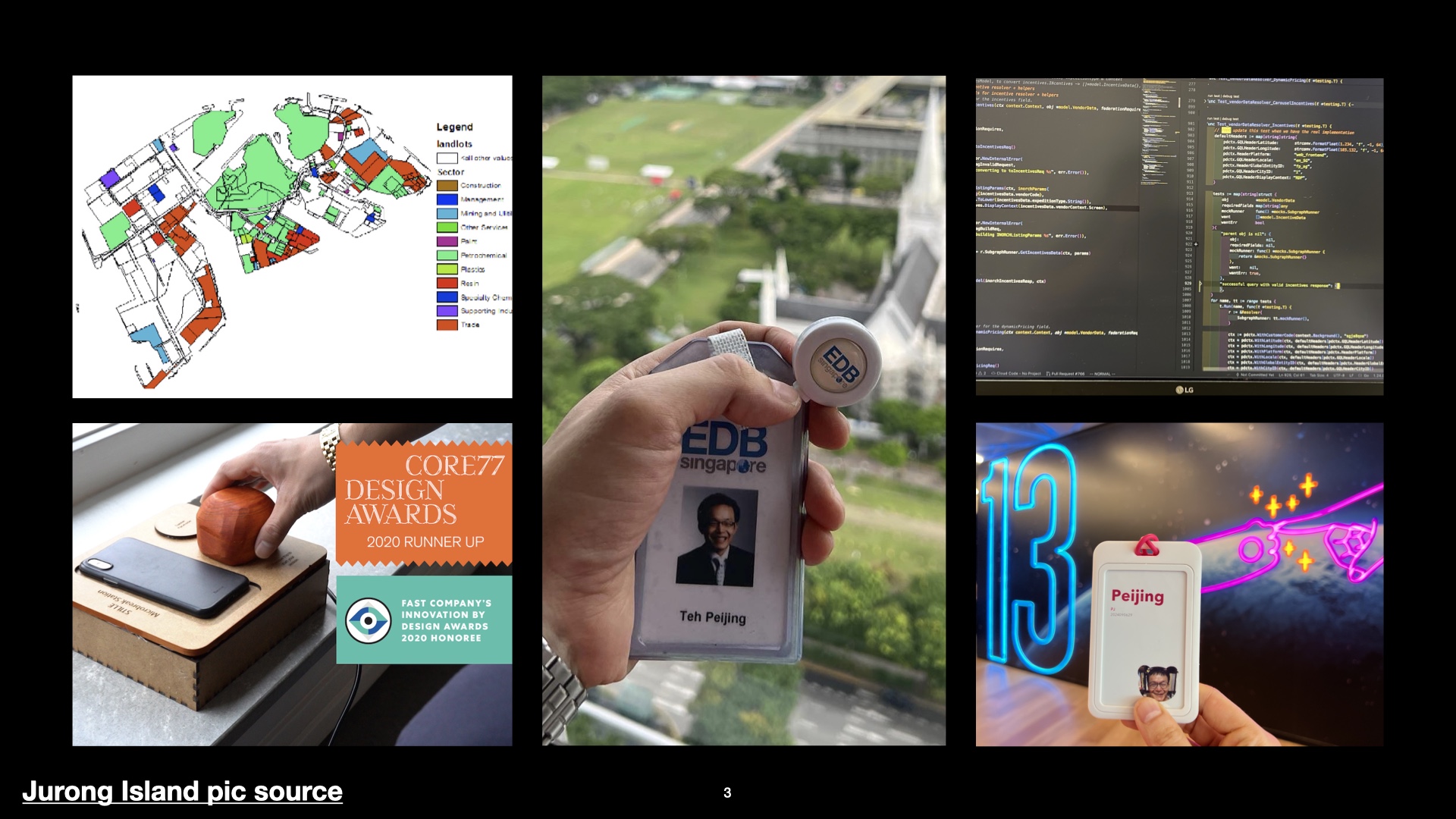 | Intro of myself worked in the Singapore Economic Development Board (EDB)[, started with overseeing the petrochemical industry & got intimately hands-on with collaborative-design-style work; later got sent to India and also in Strategic Planning. There, I got involved with designers and thought they are very different from the usual management consultants I knew. Went to CIID in Copenhagen in 2019 for IDP 2019 Went back to EDB to serve out my bond for two years. Quit in 2022 to learn coding Hypothesis that backend, service design and product management are kinda at the same level of abstraction. Tested that hypothesis by completing a backend software engineering internship at foodpanda/deliveryHero. After I finished my traineeship, I told my wife I really wanted to continue this path. Being a Singaporean pragmatist, she said “your entry level engineering salary is not going to cut it….” # |
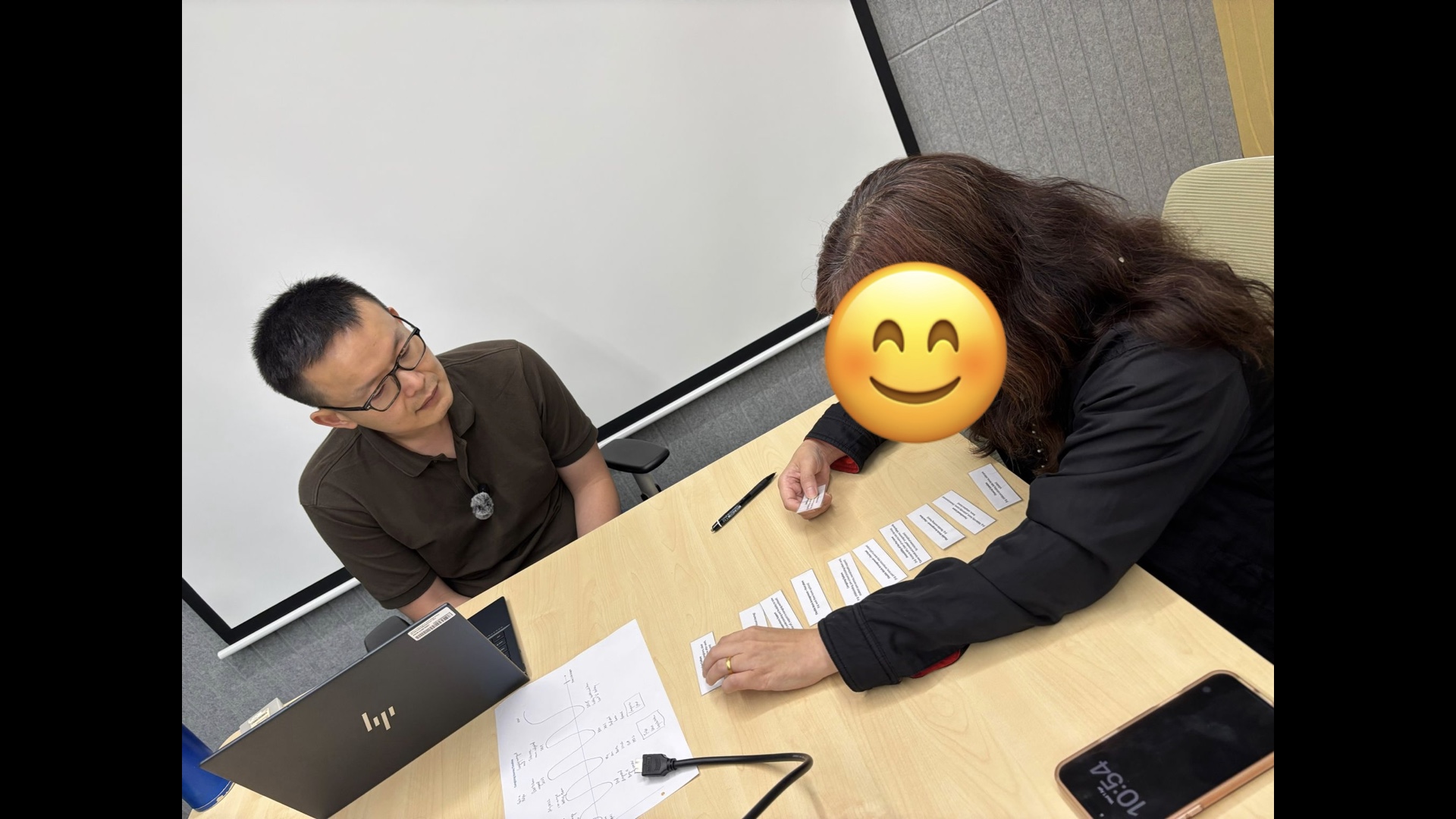 | So now I am back in government under the Public Service Division’s Transformation Lab (T-Lab), and am the principal design lead. We are an internal government consultancy focused on using human-centred design and Organisation Development (OD) to drive public service transformation. But enough about me, let’s talk about the Tale of Three Technologies. # |
 | The first technology i am going to talk about is # |
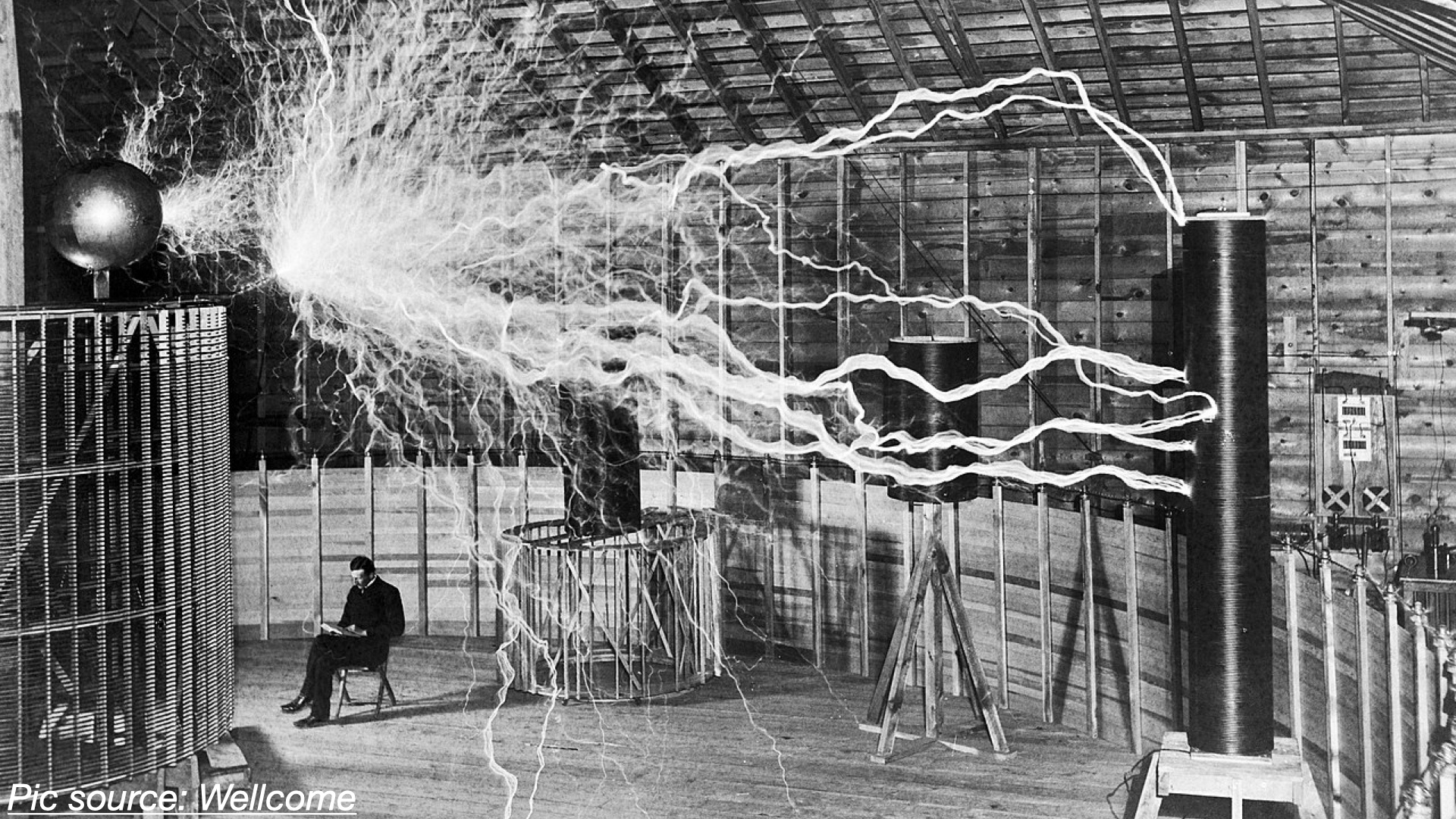 | Electricity. Specifically, the electrification of the textile industry, in this place called Lowell, Massachusetts in the late 1800s. Pic source: https://en.wikipedia.org/wiki/File:Nikola_Tesla,_with_his_equipment_Wellcome_M0014782_-_restoration2.jpg # |
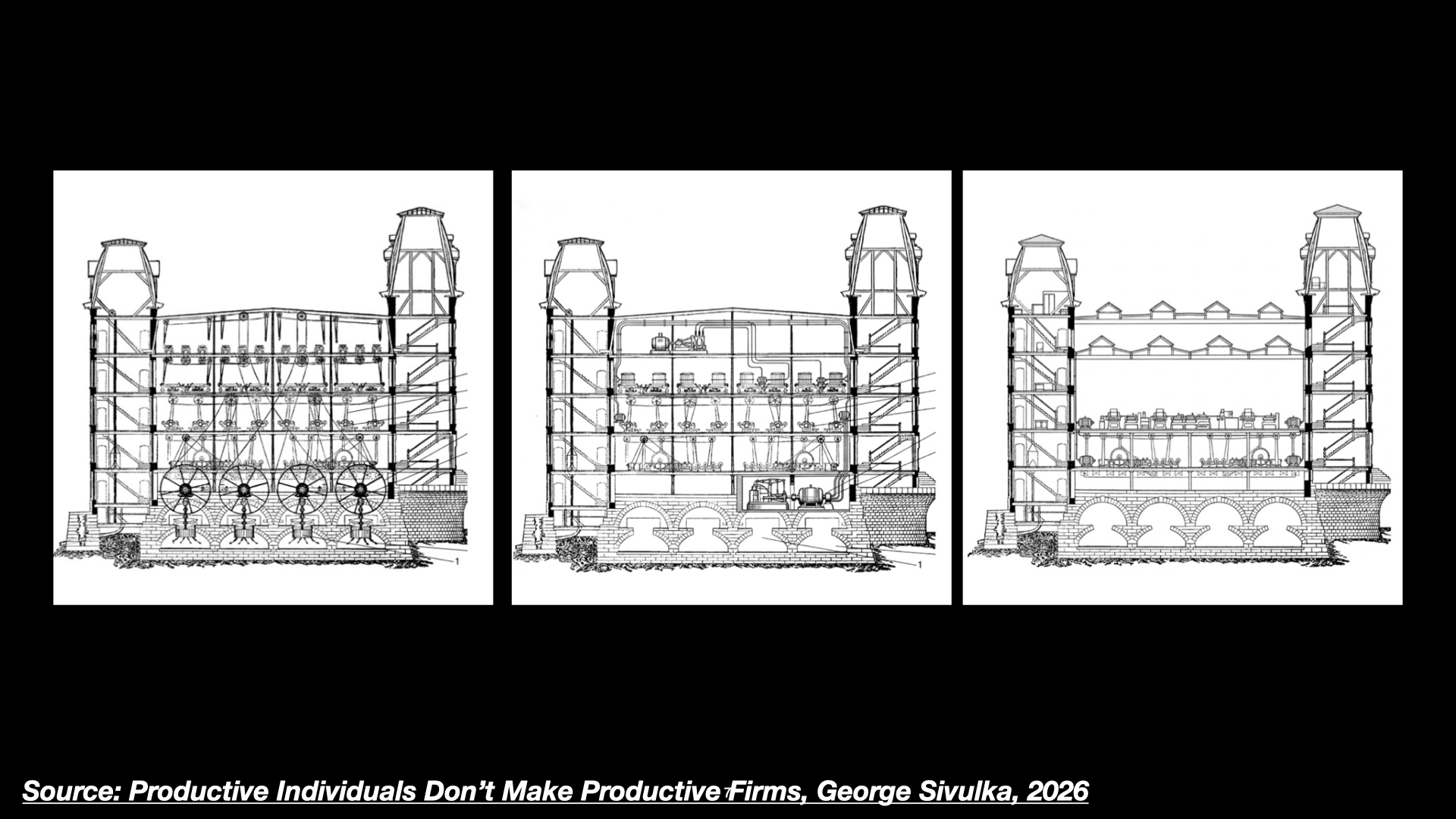 | From Sivulka:
“In the 1890s, electricity promised enormous productivity gains. Textile mills in New England, built to harness the rotational power of steam engines, quickly installed faster electric motors in their place. But for thirty years, electrified mills saw almost no increase in output. The technology was far superior. But the organization was not. It wasn’t until the 1920s, when factories completely redesigned the mills once again, with assembly lines, individual motors within every piece of equipment, and workers and machines executing drastically different jobs, that electrification produced meaningful returns.” I am sure you can see the parallels with our current AI era, where AI tools are making individuals super productive, but organisations are not yet productive. Source: https://www.hebbia.com/blog/productive-individuals-dont-make-productive-firms # |
 | The 2nd technology is # |
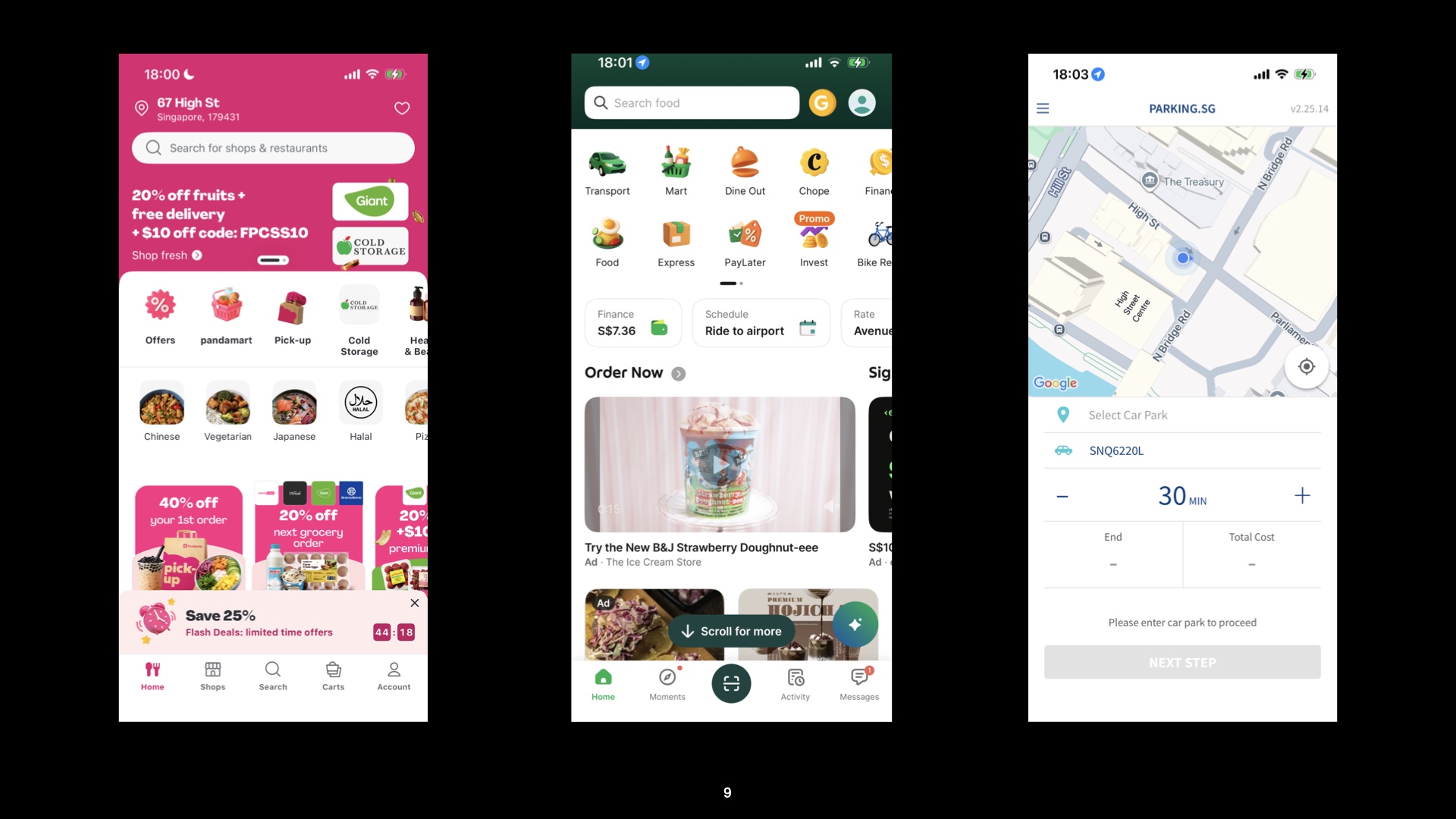 | … digitalization, especially with Web 2.0 and mobile apps. # |
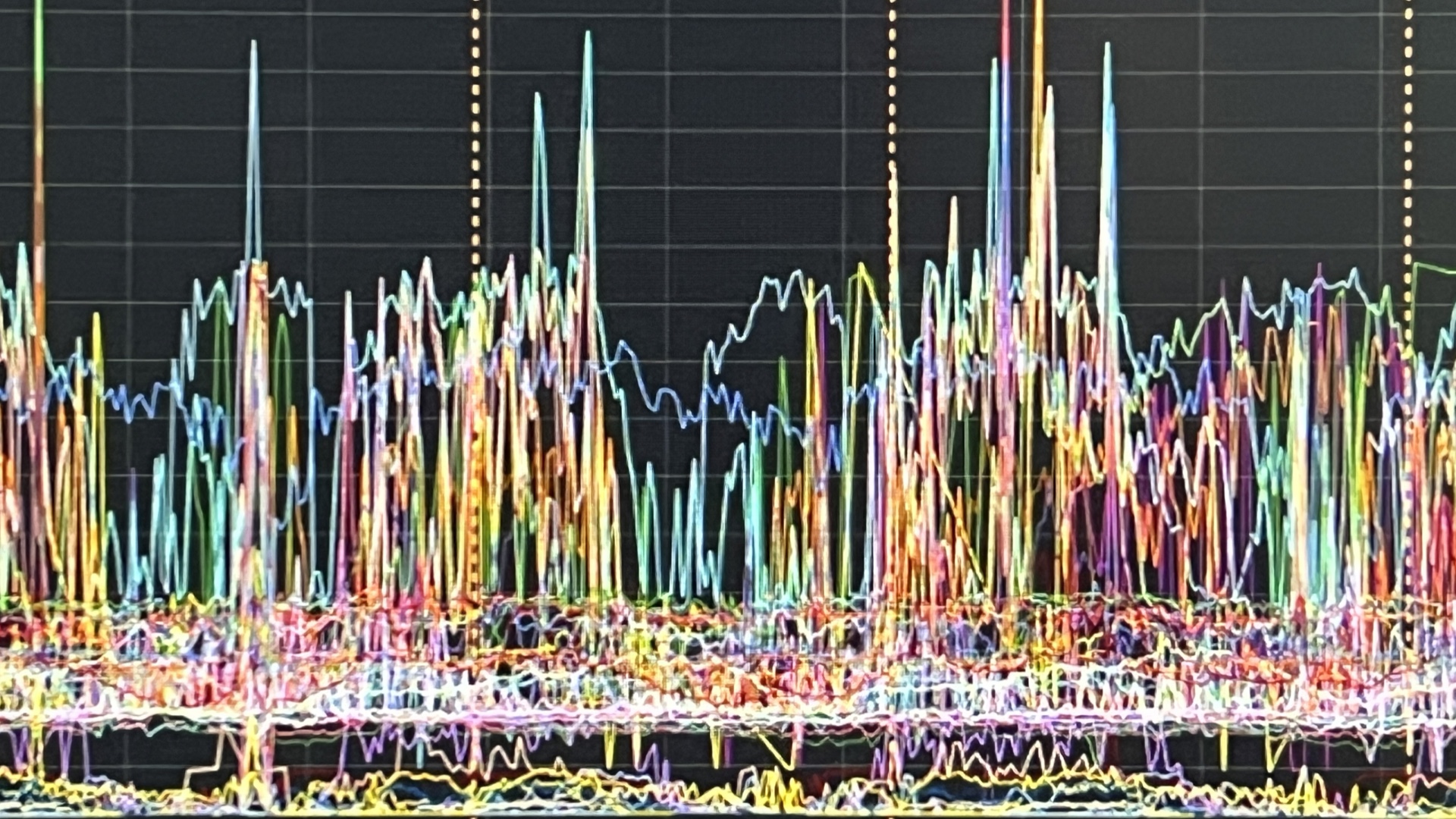 | One big lesson I took away from my traineeship was that backend engineers of these large apps collect data that would be a service designer’s dream. This is a screenshot of one of the dashboards (and there are many!) showing the app’s activity. But there is also a similar dashboard for tracking user activity on the apps: your every click, pause is recorded. # |
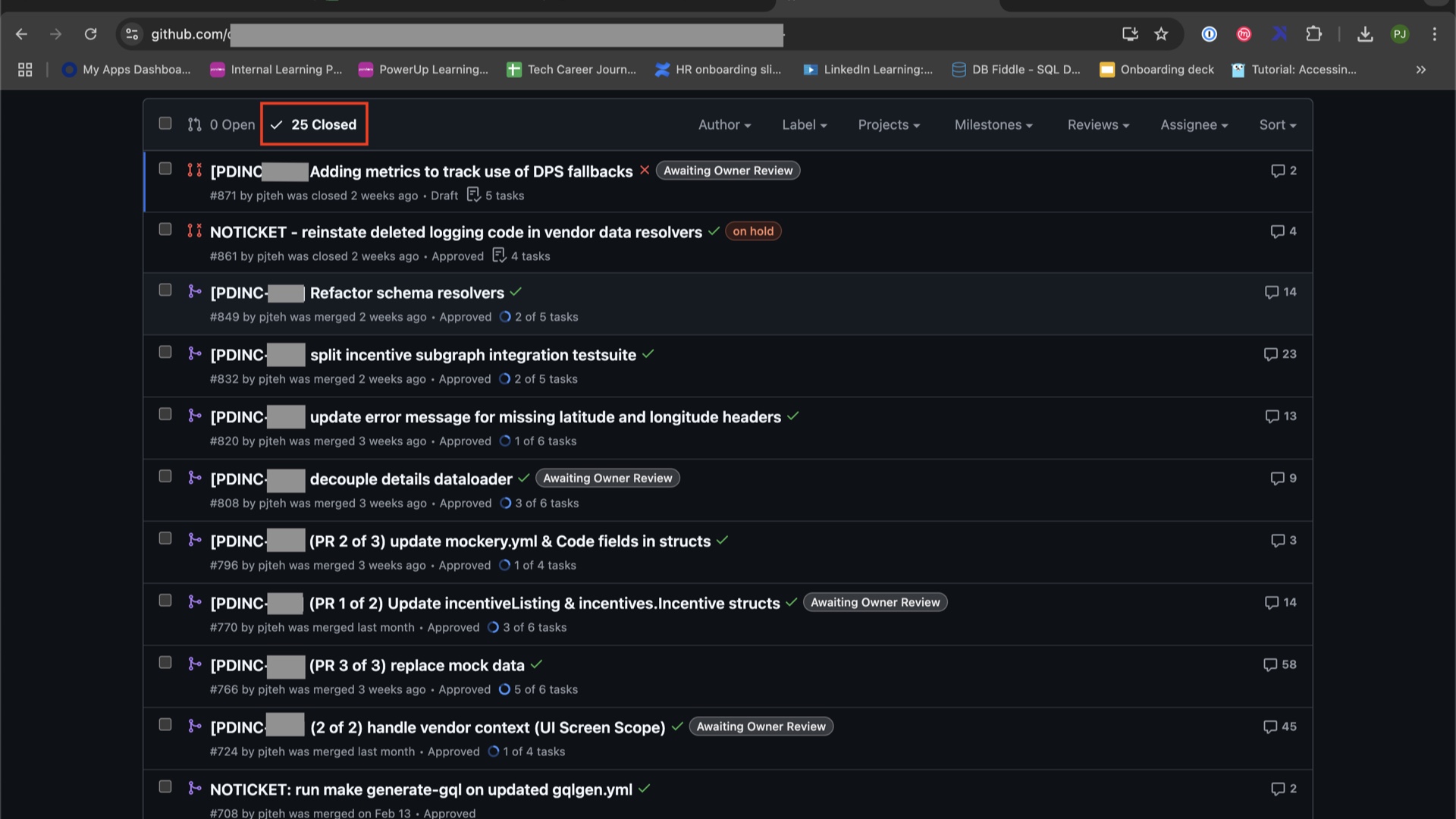 | As I looked through the 25 pull requests I completed in my traineeship, I asked myself, What did I learn? backend engineers have a lot more power than service designers or product managers: a microservice or app can survive without service design or product management, but it’s often dead without a backend engineer. With so much data, there’s no real need for a large team of designers. In fact, a fellow trainee was on a team building and delivering a new feature, and their team comprised of 4 engineers, 1 product manager, and no designers: the team’s plan was to build the feature, use the existing design systems, roll it out in an A/B test, and then use the data to decide what to build. The engineers are indispensable, because they control and maintain the means of production (which I will get to later). # |
 | The third technology is # |
 | … AI. This is my favourite picture depicting AI, especially since I have two cats I adopted from Mumbai, India. # |
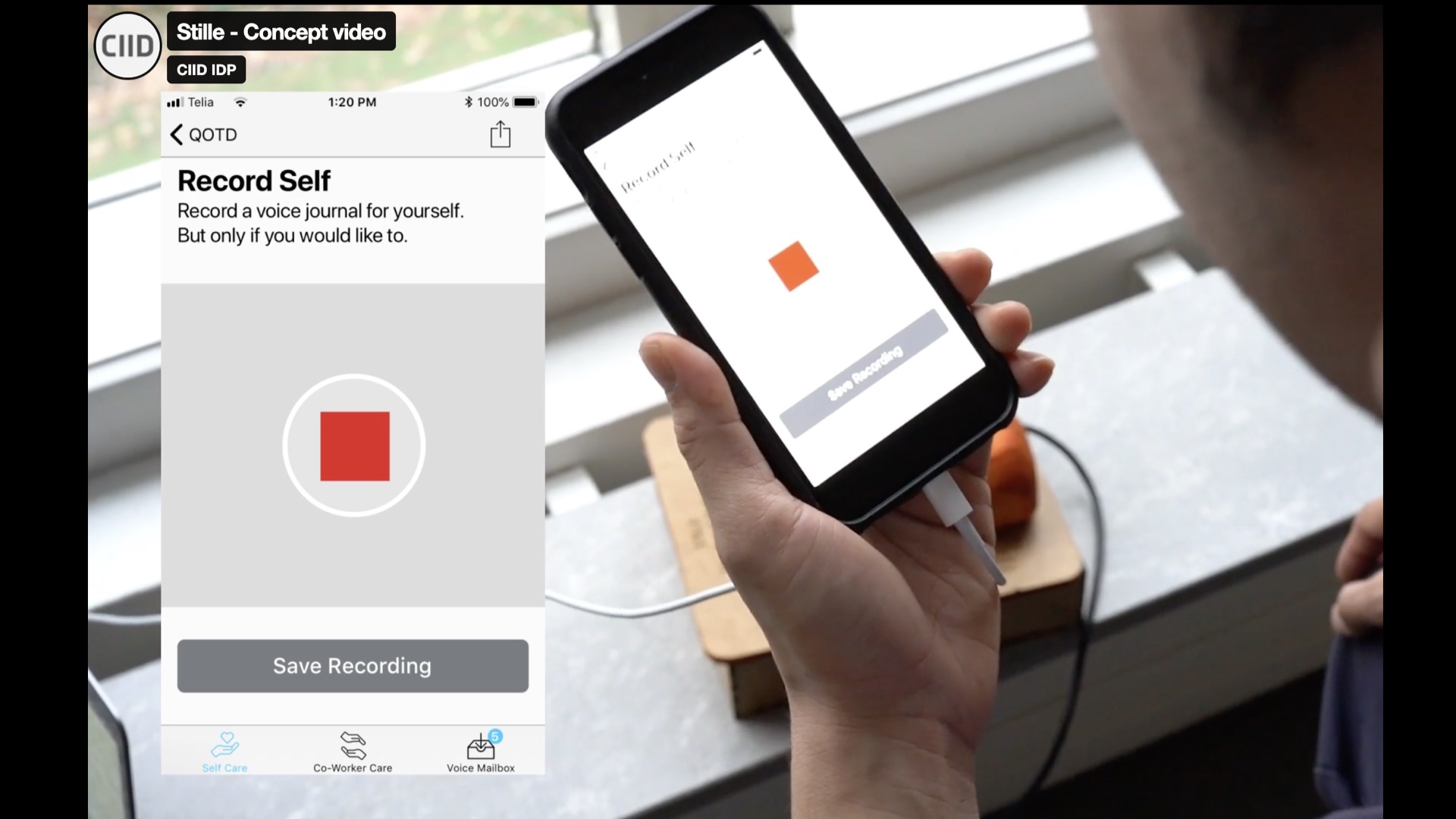 | So in 2019, when I did my final project in Copenhagen, one of the touchpoints of the service I was developing involved an app interface. This mockup that you see here was created using Sketch, as well as Origami. After I finished design school, I wanted to make my idea come to life! Hence I decided to learn coding to make it happen. # |
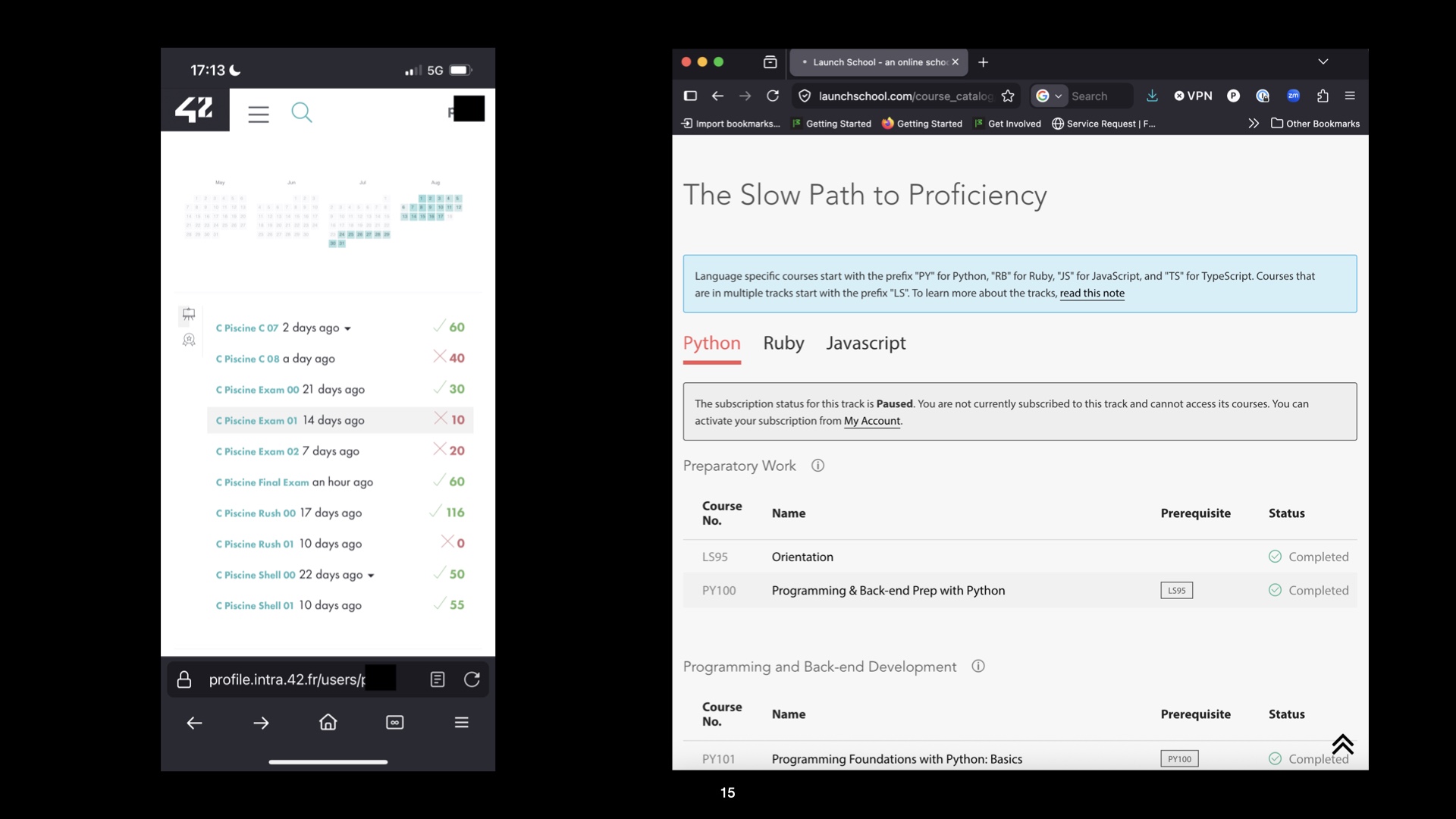 | And my journey involved going through Ecole 42 (at SUTD’s 42 Singapore), as well as doing an online coding programme called Launch School. After a few years, I still wasn’t able to make my app ideas come to life. # |
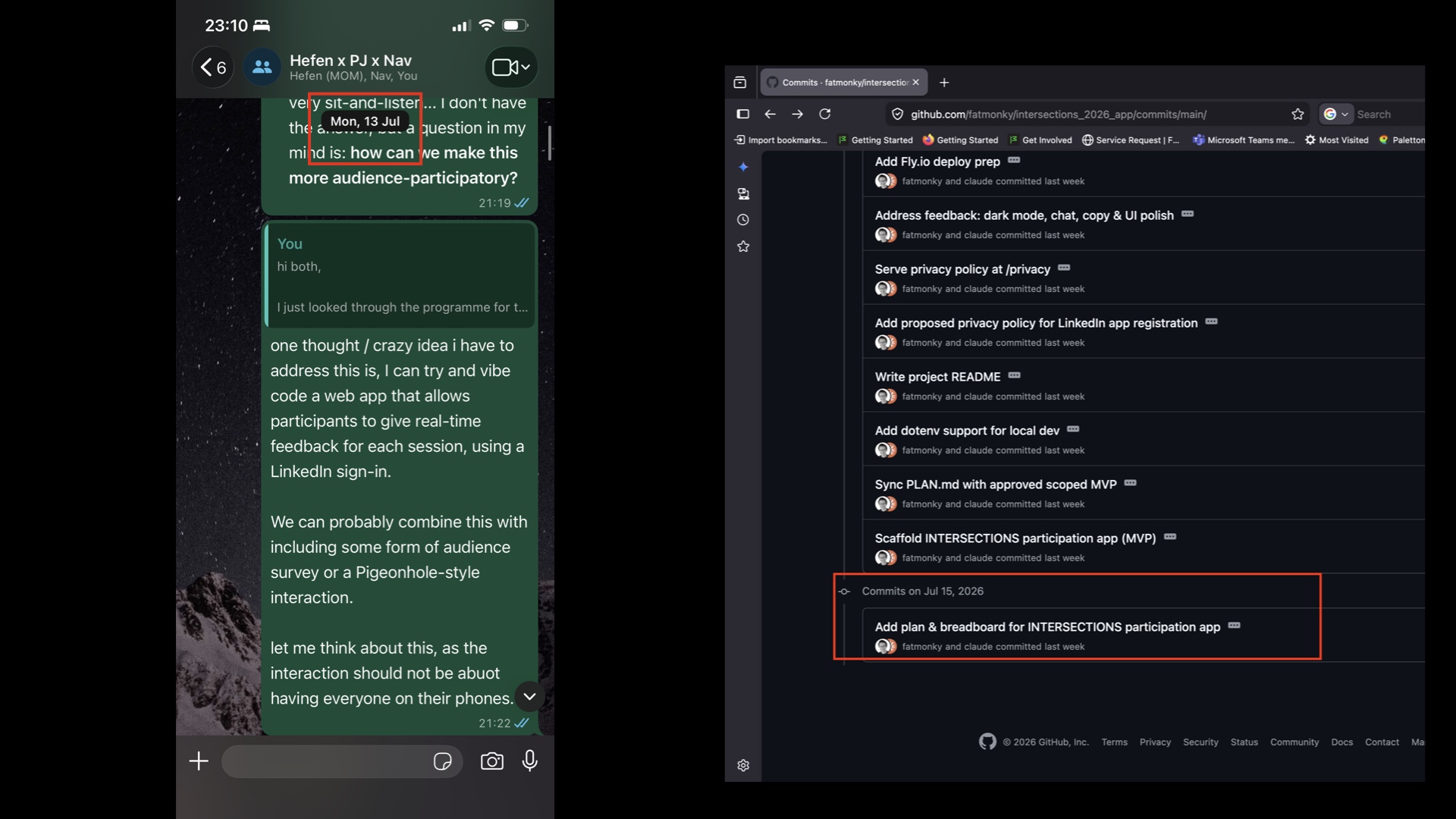 | But let me tell you the story of the intersections participation app you have in hand. Just 10 days ago, I Whatsapped both Hefen and Nav (the two main leads for the conference) about this app idea, as a way to increase audience participation. Two days later, I started using Claude Code to start implement the plan. # |
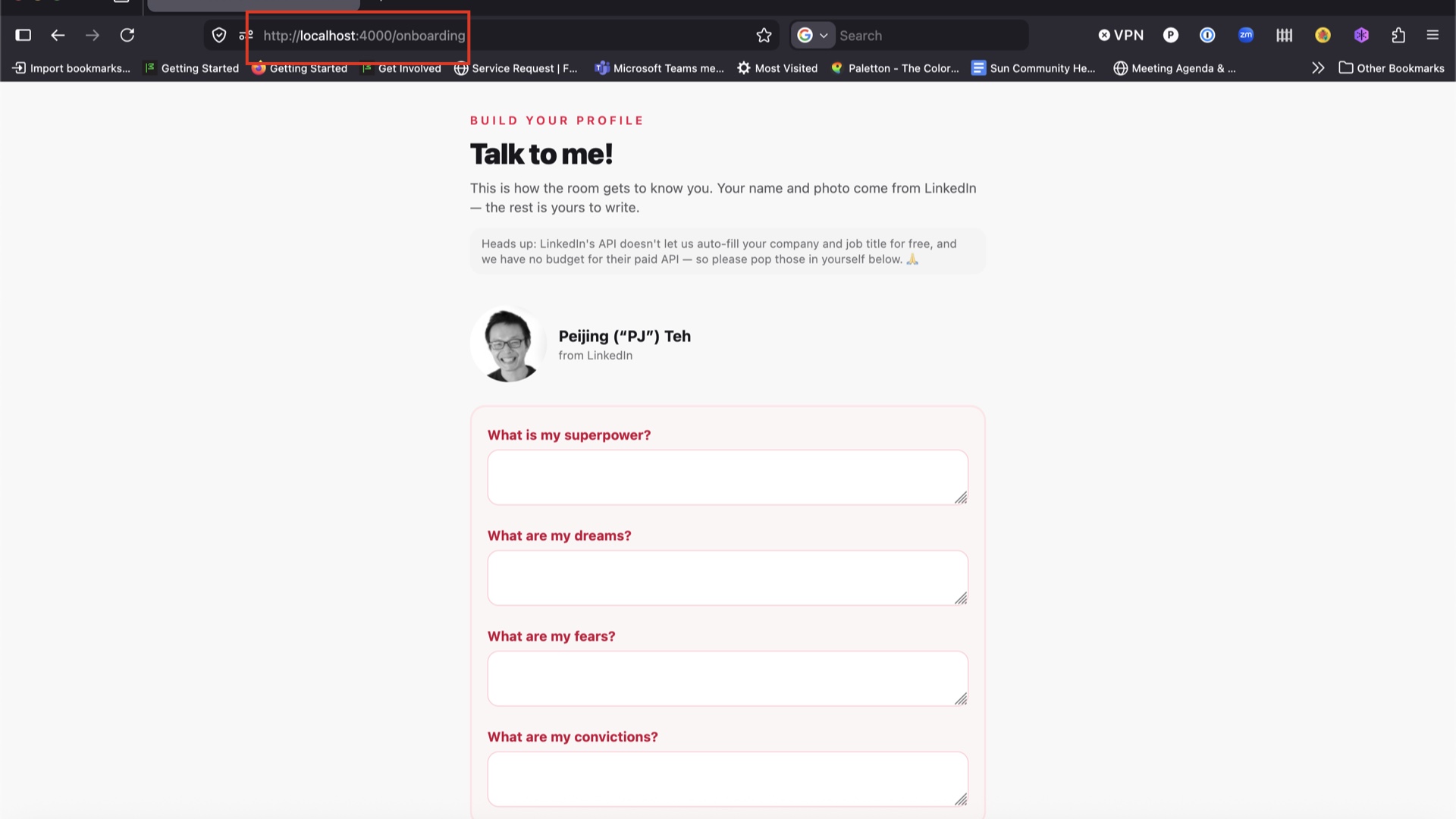 | In almost no time at all, I got a working prototype running locally on my laptop. # |
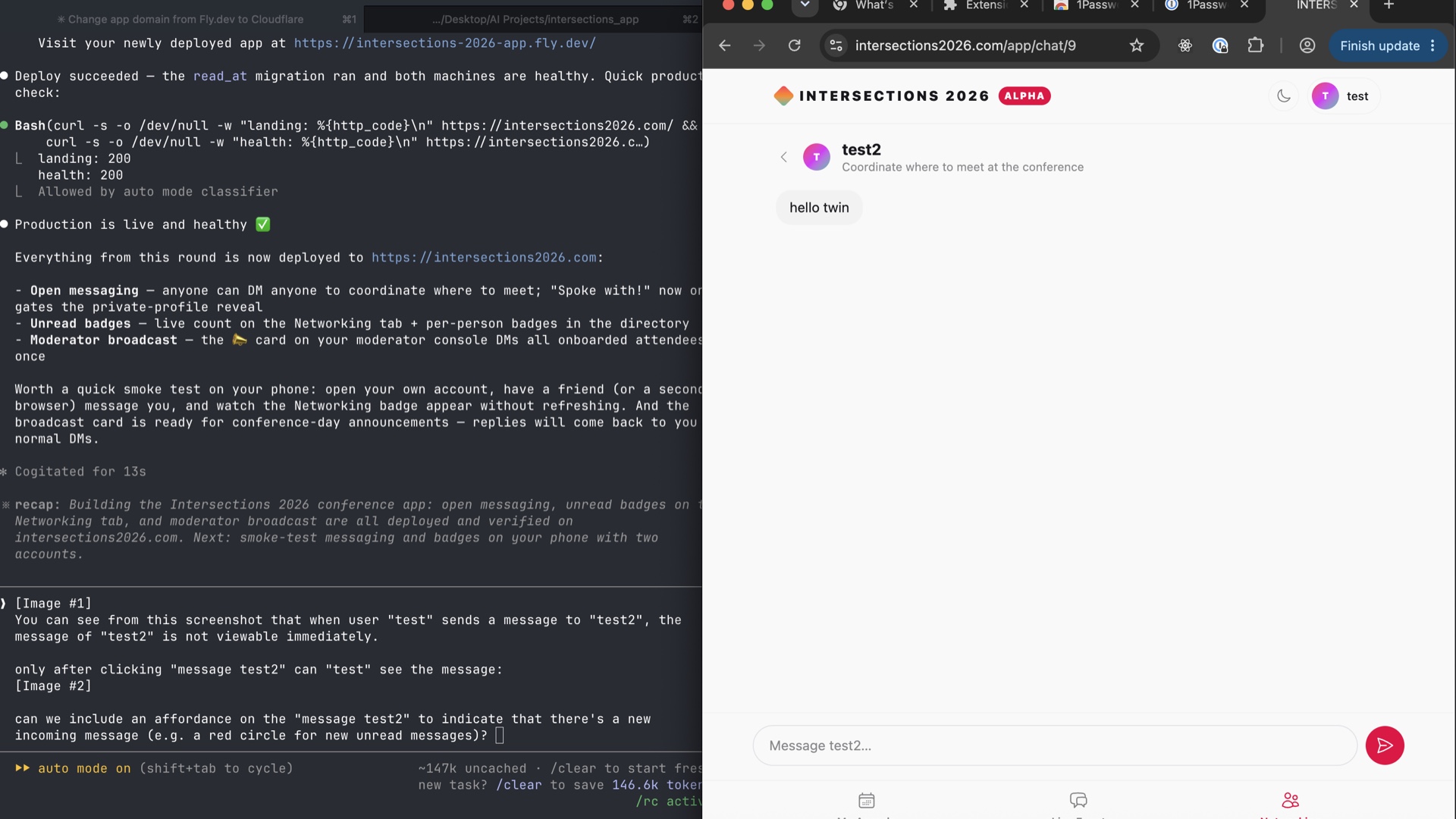 | And just last night, I was working on improving the user affordances of the app, while working on my slides at the same time! # |
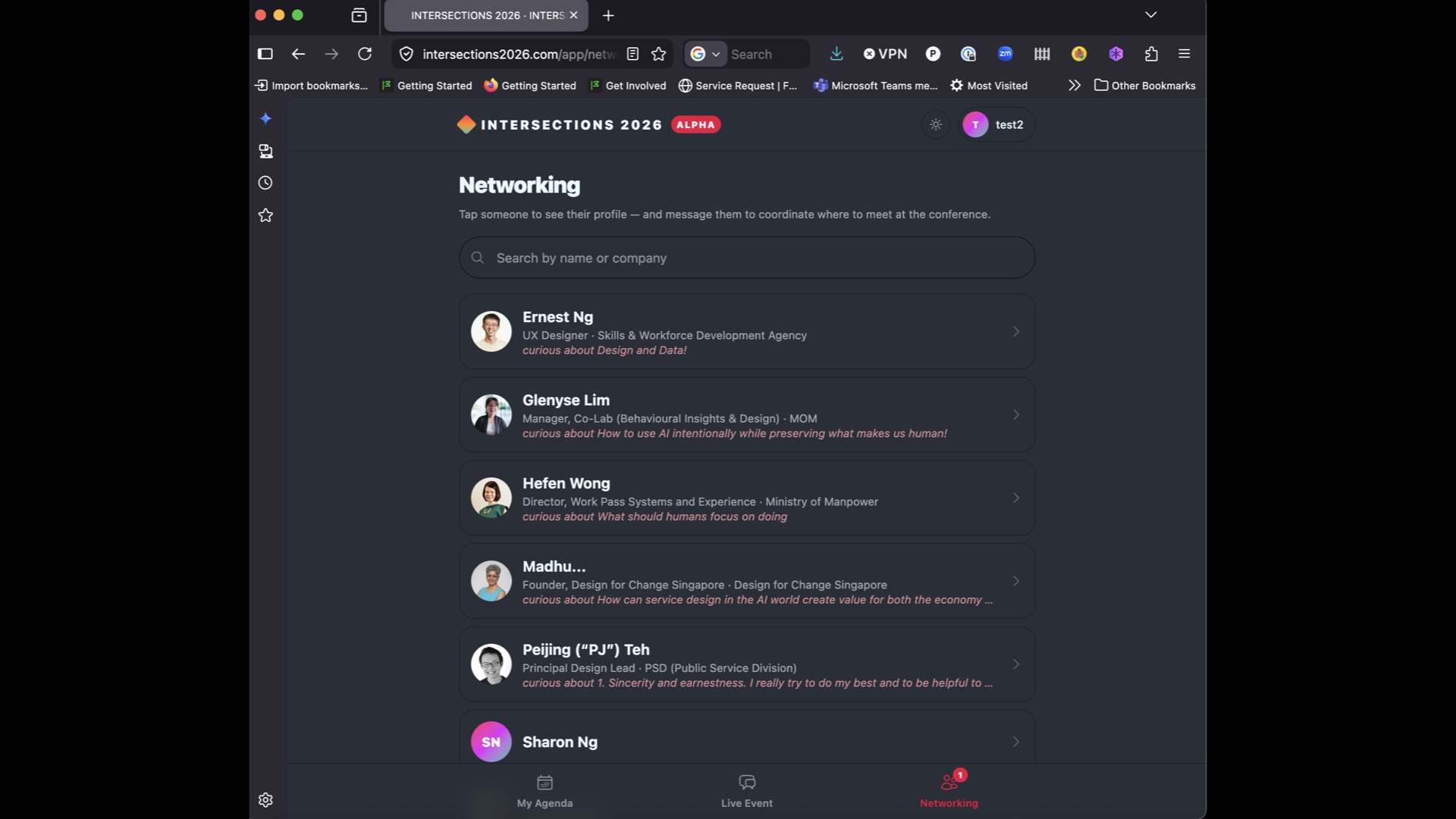 | So it took about 11 days (actual time much less than that) to bring a random idea I proposed over Whatsapp, and to deploy and bring it to life. # |
 | But what does all this mean for us designers? # |
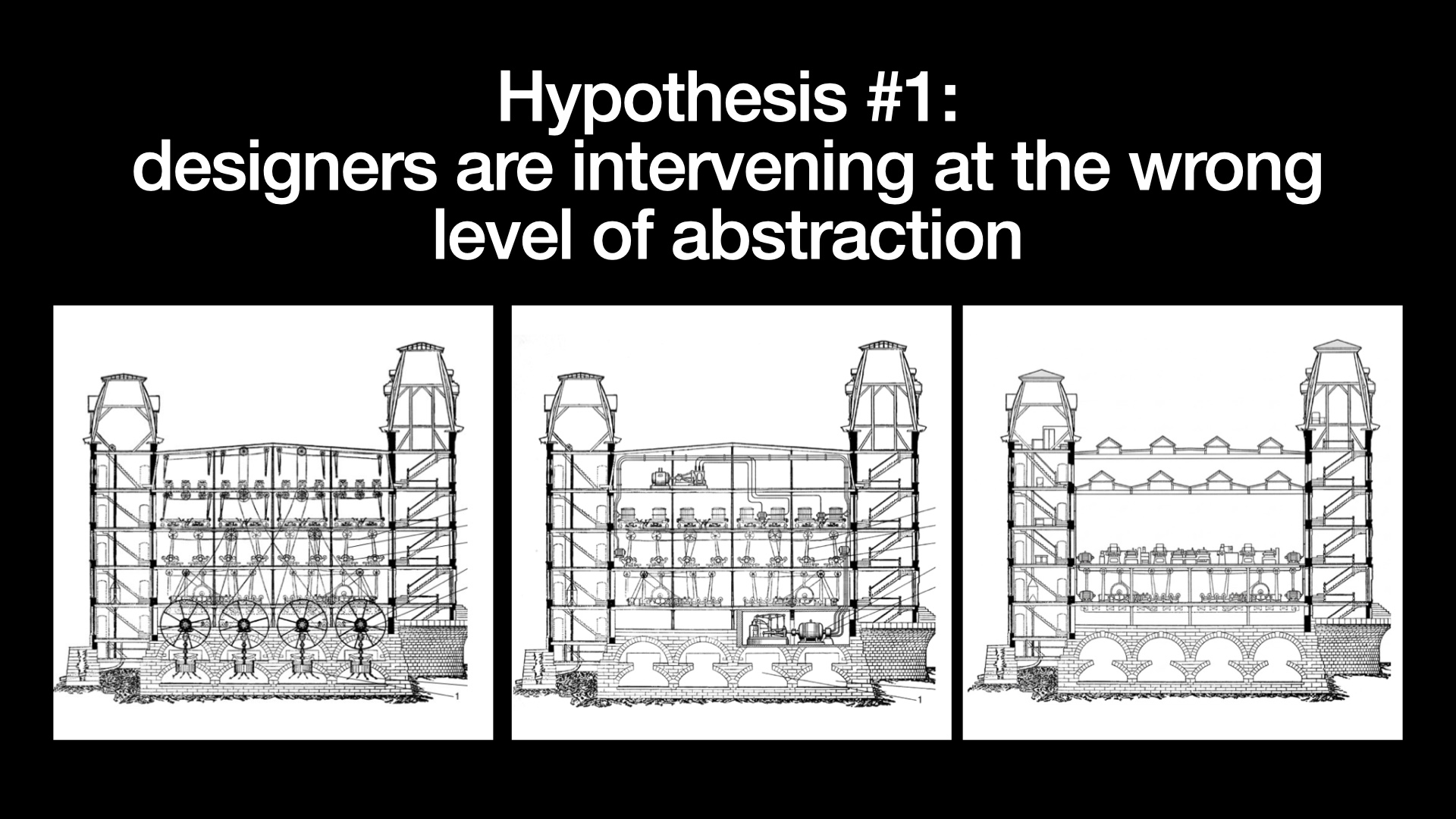 | As someone wise once said to me “when you’re stuck, zoom in or zoom out”. And my first hypothesis is that we, interaction designers, are intervening at the wrong level of abstraction. # |
 | One of my favourite quotes is this quote by Winston Churchill, when the House of Commons was deciding to rebuild. Churchill was adamant that the House be rebuilt on the same shape, as that was coherent with the British Parliament’s traditions and processes. # |
 | Scott Belsky is a former founder and chief product officer at Adobe, and he wrote this about AI. So the big difference between AI and buildings, is the speed of how AI can shape the builders. So this has two implications/ideas of where we could intervene as designers. # |
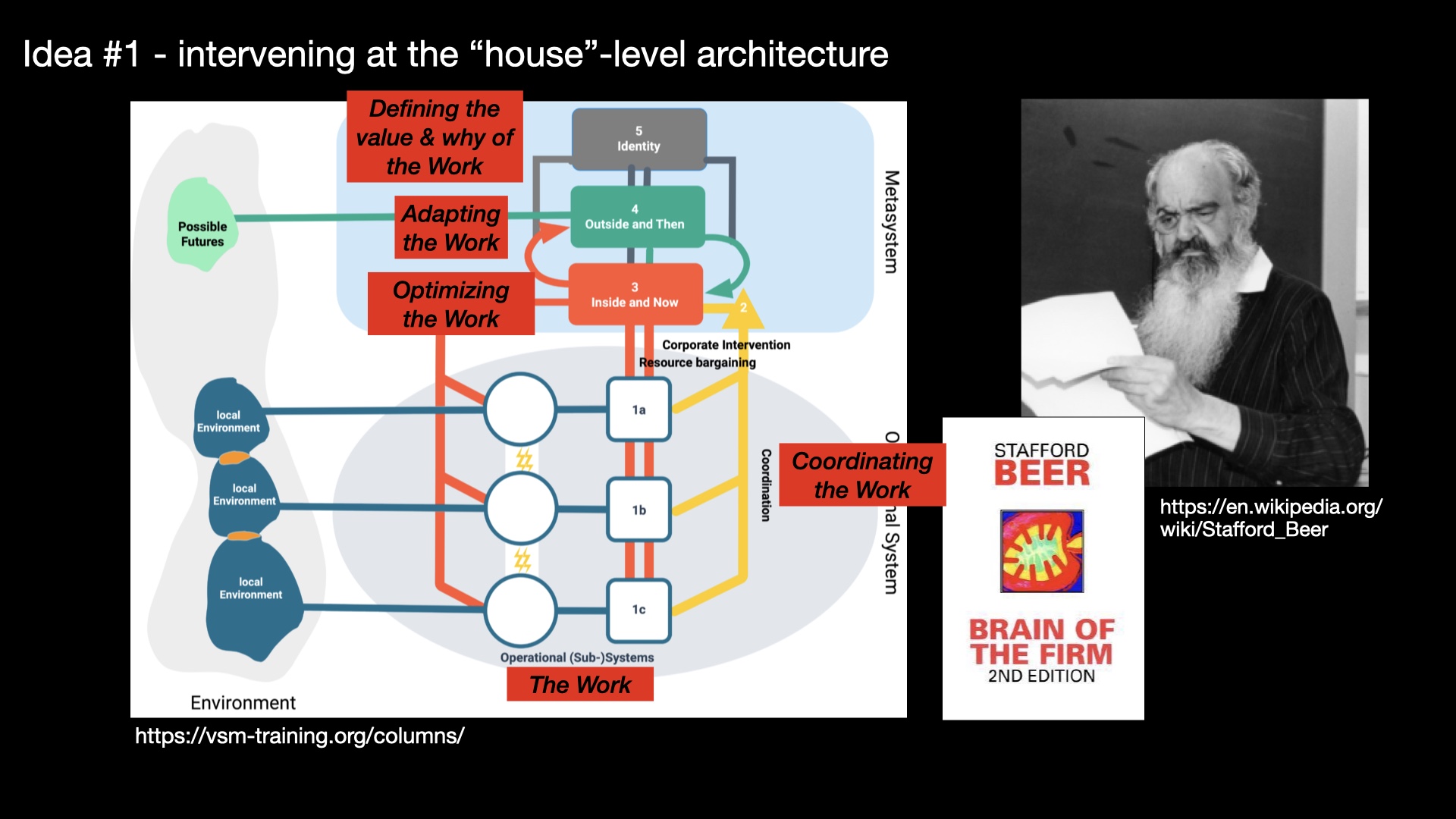 | One is intervening at the “house-level” architecture.
We service designers need to zoom out and design the whole house, not just our own room where we are in . I thought this management cybernetics model (the Viable System Model) is a great way to explain where we should possibly intervene. If you look at the red tags, every viable entity does The Work The Coordination of the Work Optimizing of the Work Adapting the Work (to external and future changes) Defines the Value and Why of the Work Right now, it is clear that AI affects The Work. But where we service designers probably need to intervene more are on the other parts. # |
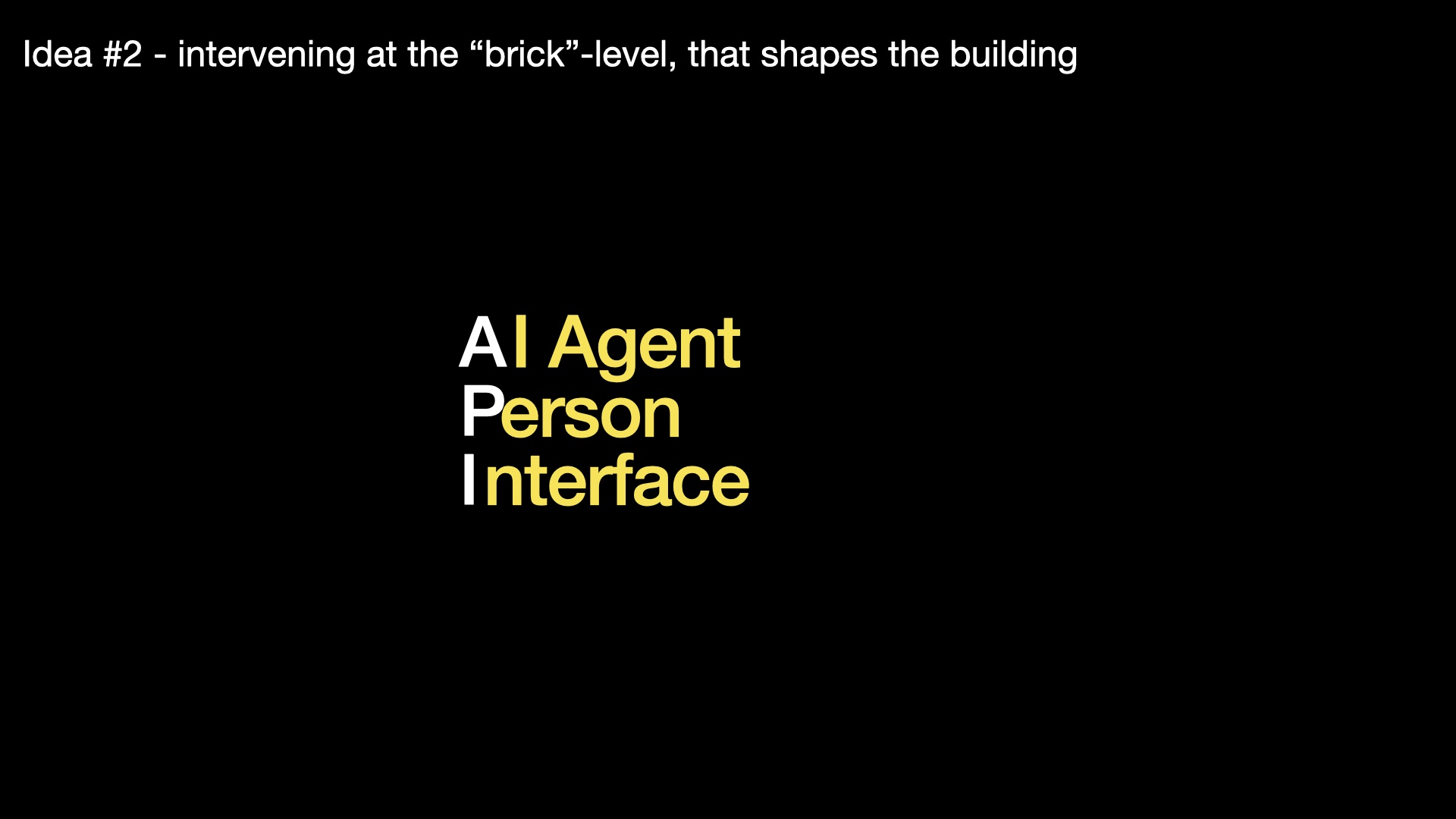 | Zooming in, to a more granular level, maybe we also need to reshape our “bricks” by figuring out new APIs: new AI Agent-Person Interfaces. (PJ’s note: after the talk, I discovered that Twitter Co-founder Jack Dorsey just released Buzz, which is an example of Agent-Person Interface. See https://buzz.xyz/) # |
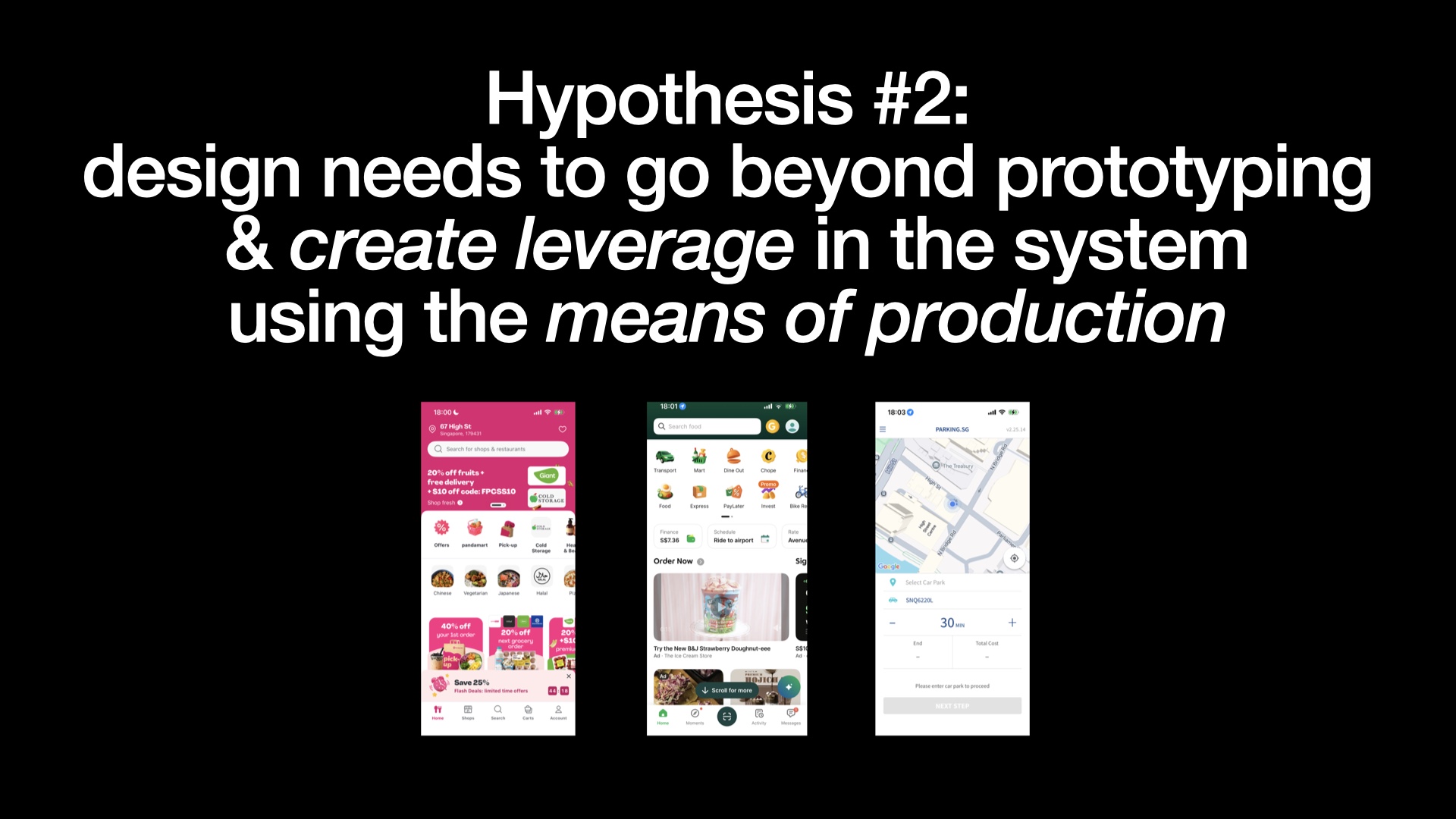 | My 2nd hypothesis is that interaction design needs to create leverage, and that means going beyond mocks and prototypes, to using the means of production. As I mentioned in my traineeship, there was no need for design at that stage, and in contrast the engnieers are critical because they own the means of production. But while I know a lot of you are in public service, there is also another layer to consider. # |
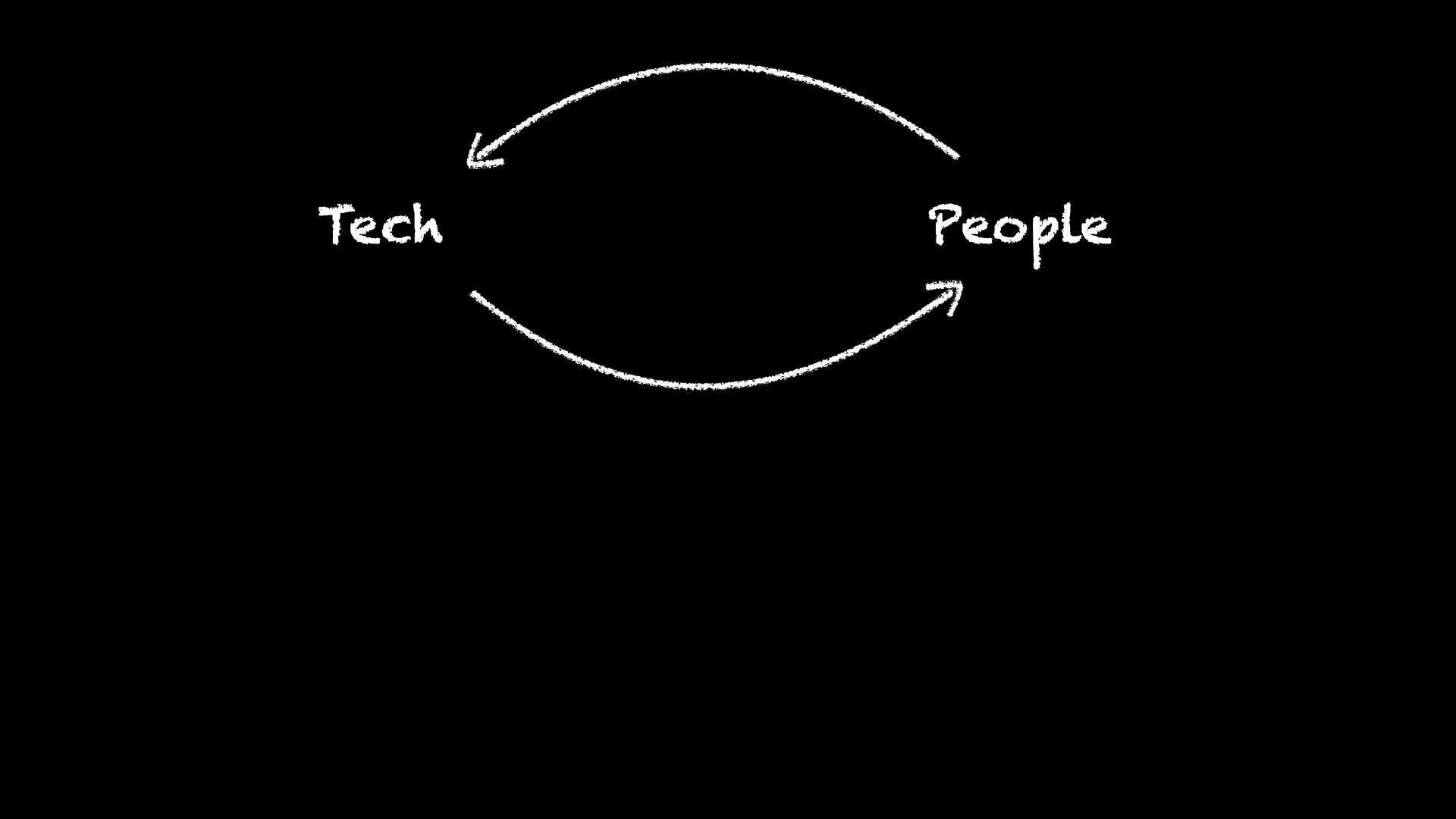 | This is the level of abstraction we tend to focus on: how tech influences people’s behaviour, and vice versa. # |
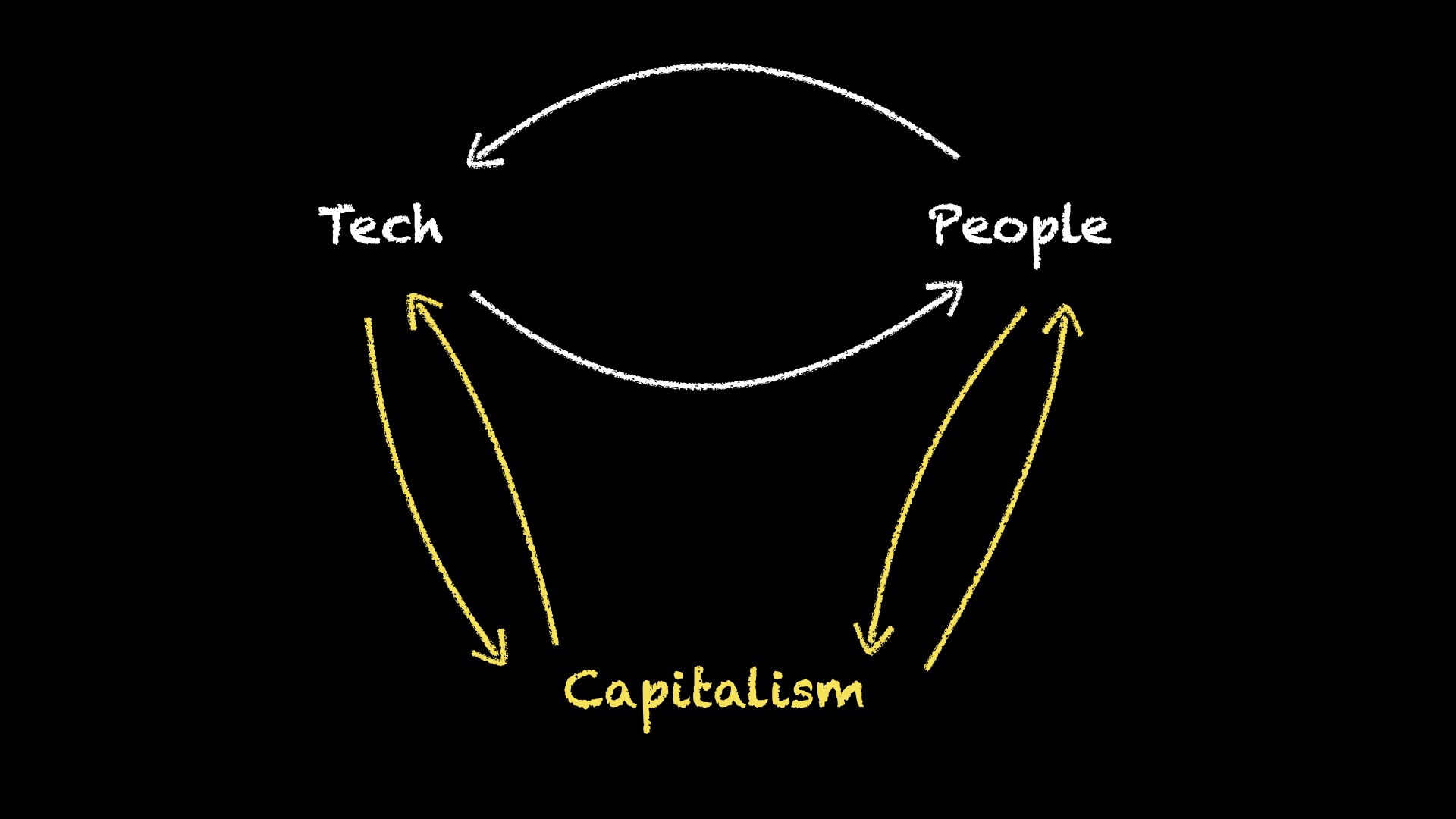 | What we miss out on, is that both tech AND people are also influenced by the driving forces of capitalism. So, if we want to make a change… # |
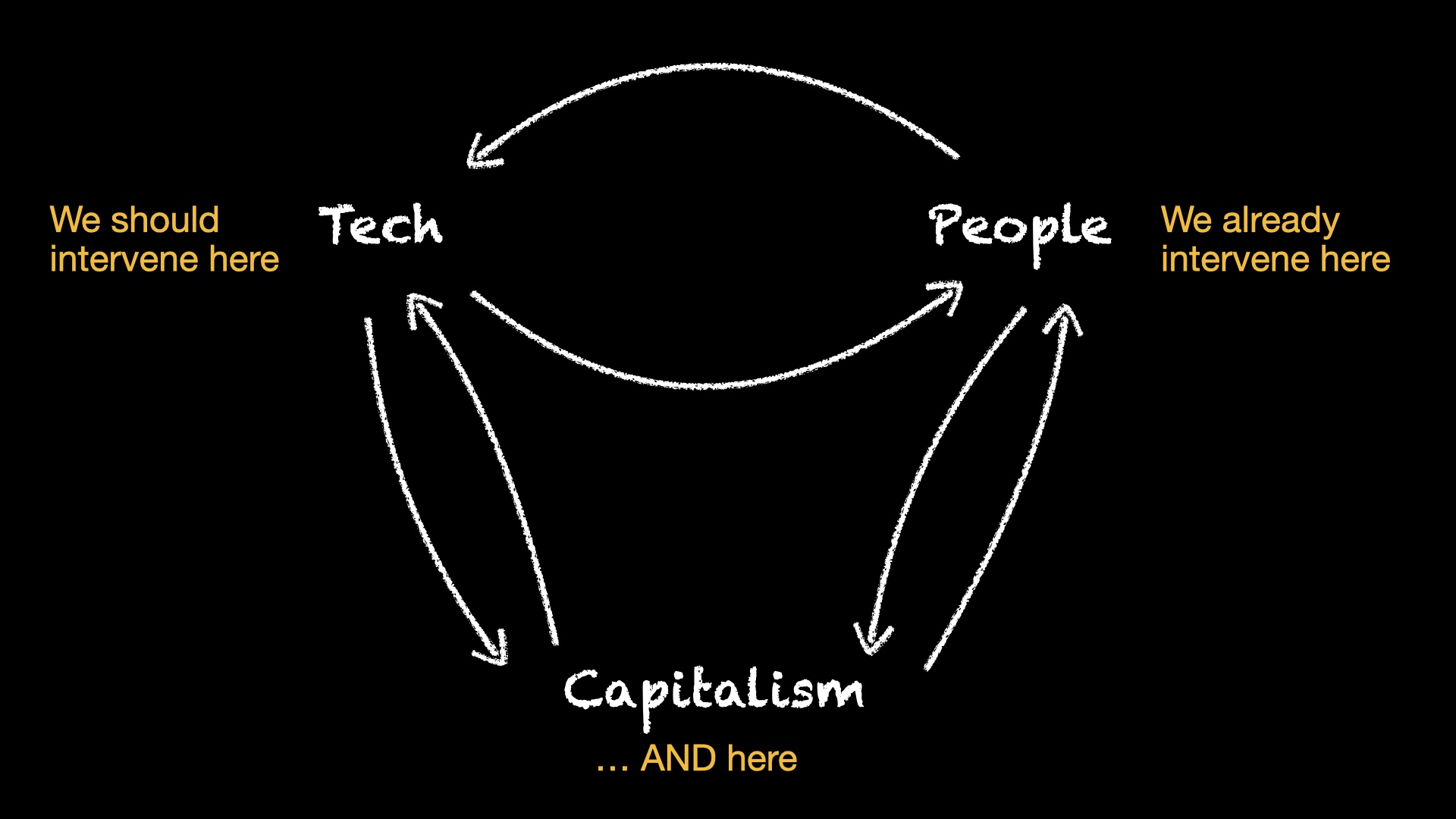 | … we need to ALSO intervene at the level of both tech AND capitalism. # |
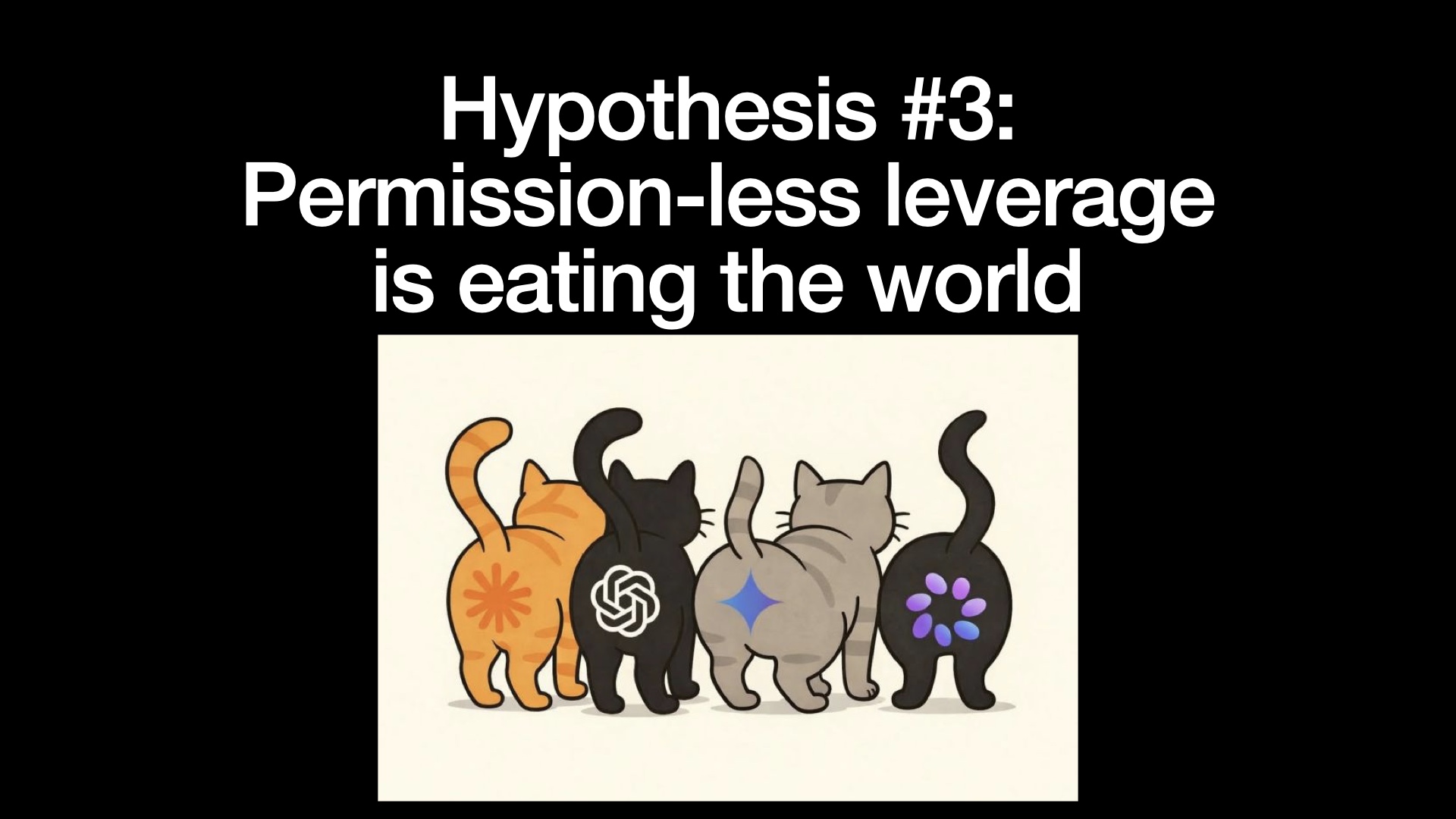 | My 3rd hypothesis is that permission-less leverage is eating the world. # |
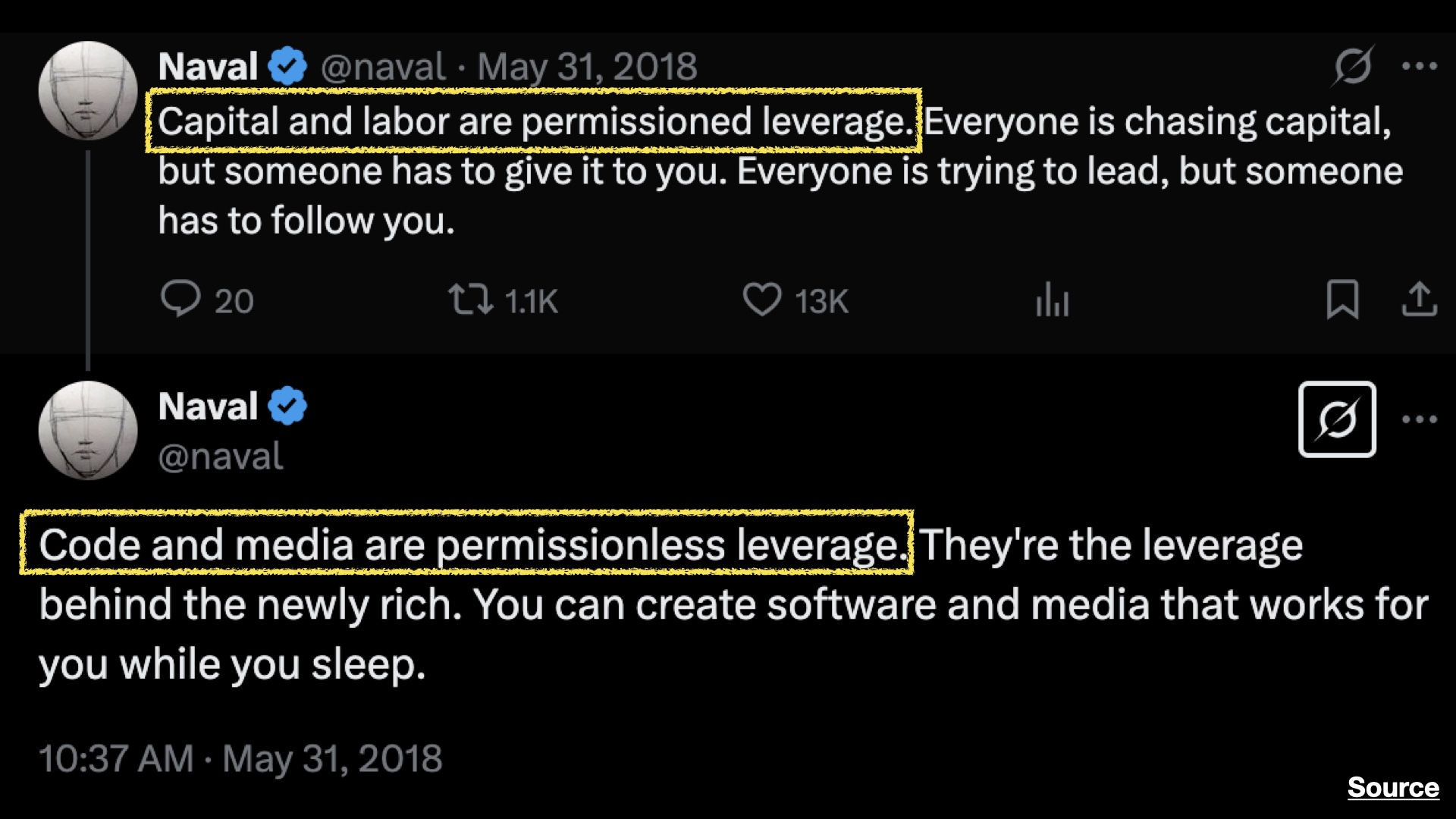 | This idea of permission-less leverage came from Naval Ravikant, and it’s in contrast to permissioned-leverage. Permissioned-leverage requires you to get permission to access the leverage. The idea of permissionless leverage is that, it is leverage you can create and use, without having to ask for permission from anyone else. Capital and labour both require permission. But code and media do not. Like I didn’t need to ask Nav nor Hefen’s permission to use my Claude Code to build the app you are using now. # |
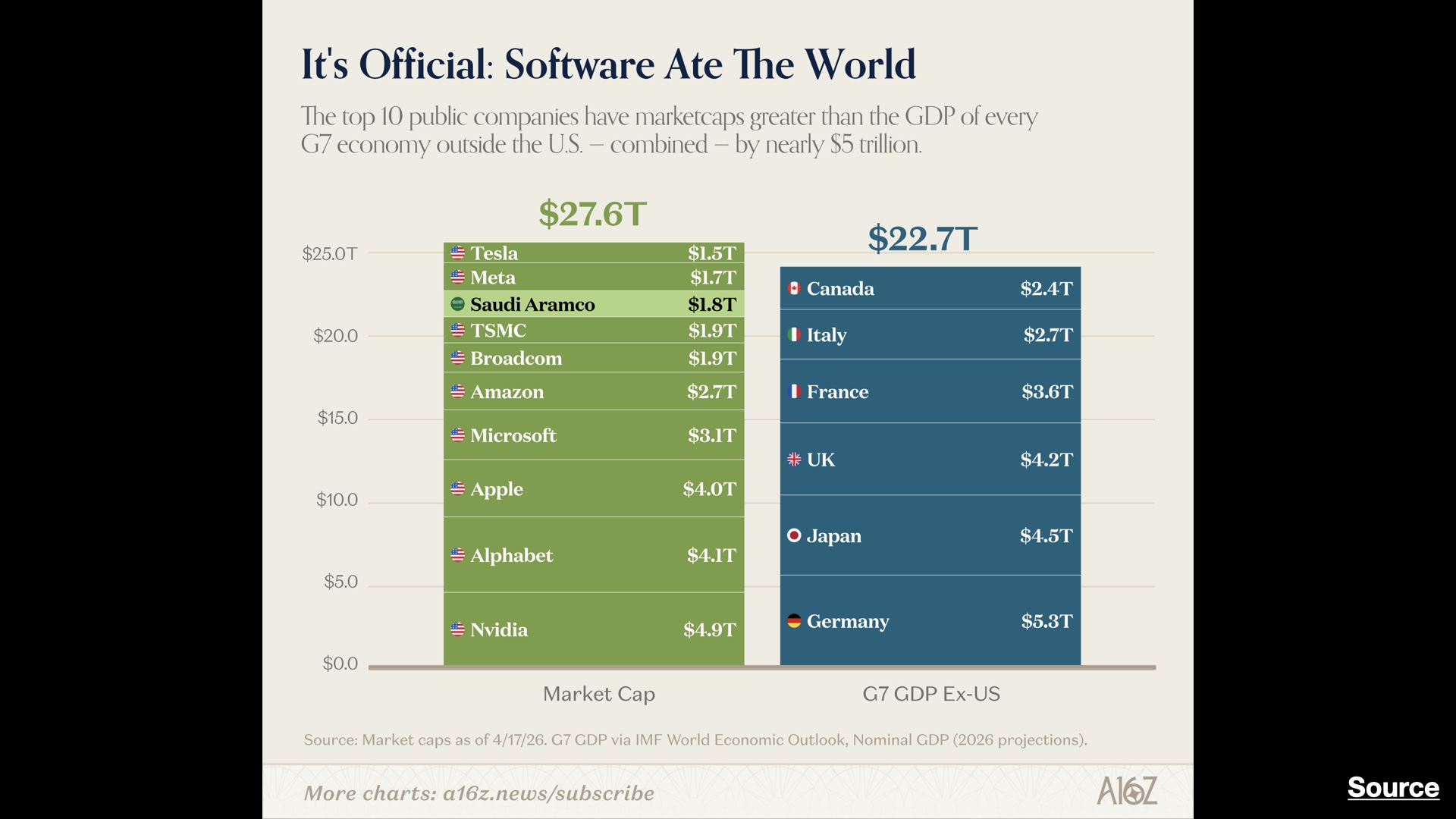 | Software is already eating the world as you can see from this graph. # |
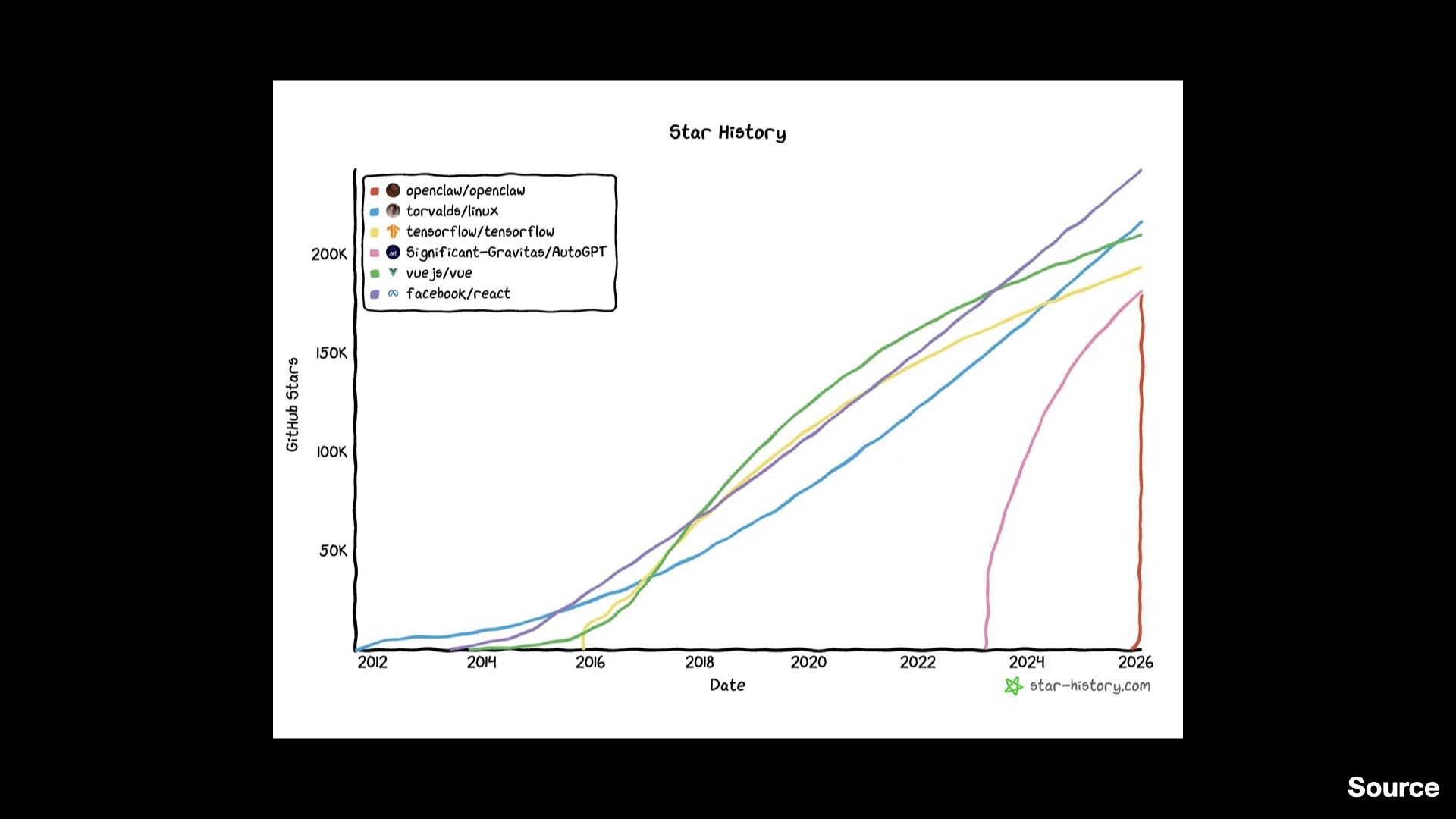 | And with AI, this permission-less leverage is only accelerating. You can see the vertical red line: this is taken from the Github star history of OpenClaw, which reached over 150k Github stars in less than a month. # |
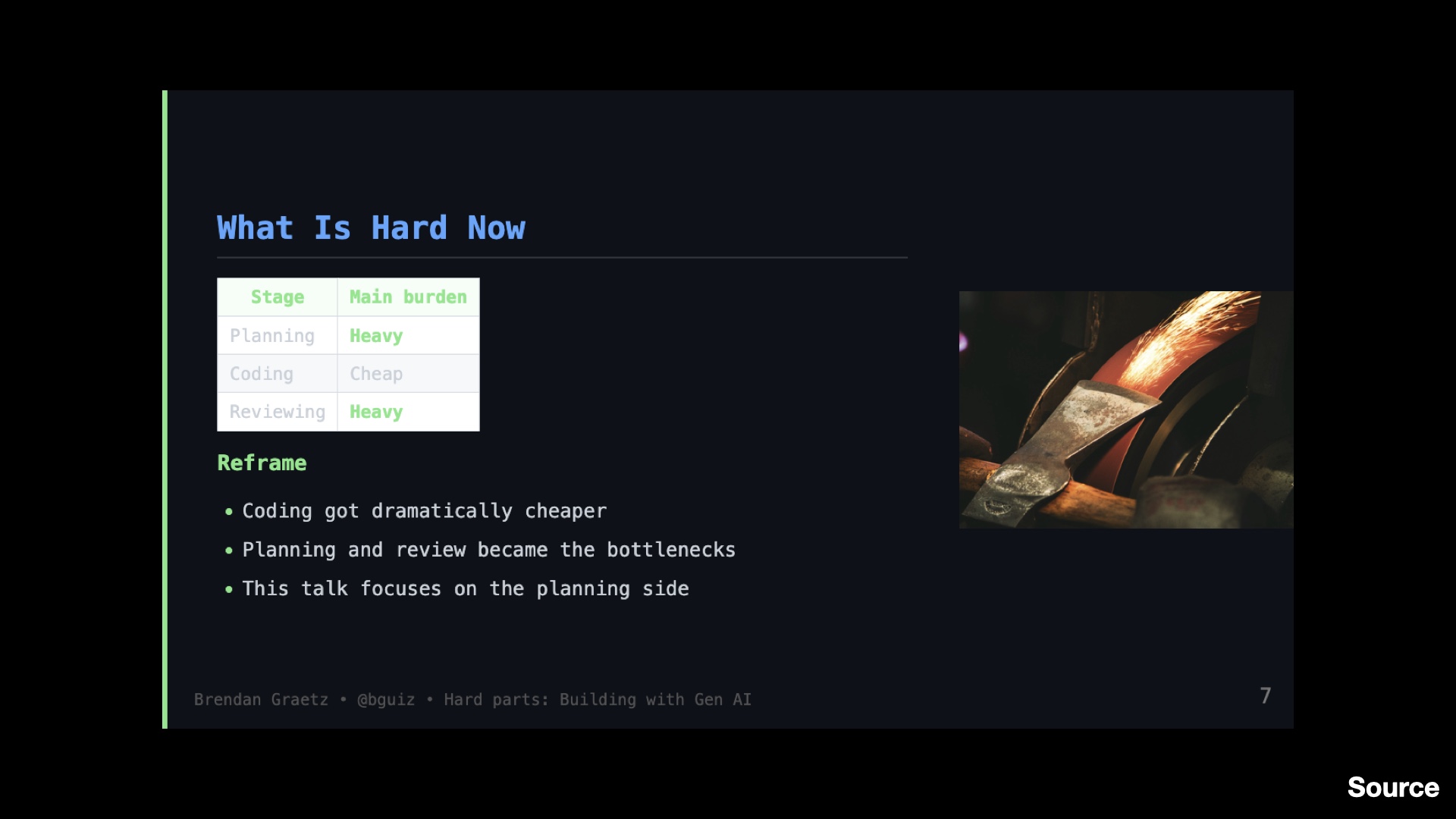 | So now, what we are seeing (from this slide, taken from Brendan Graetz whom Jensen Loke also knows) is that the coding is a lot cheaper. The permissionless leverage is now a LOT cheaper. What is not so cheap is deciding what to build, which, as service designers, we are well equipped to discover. # |
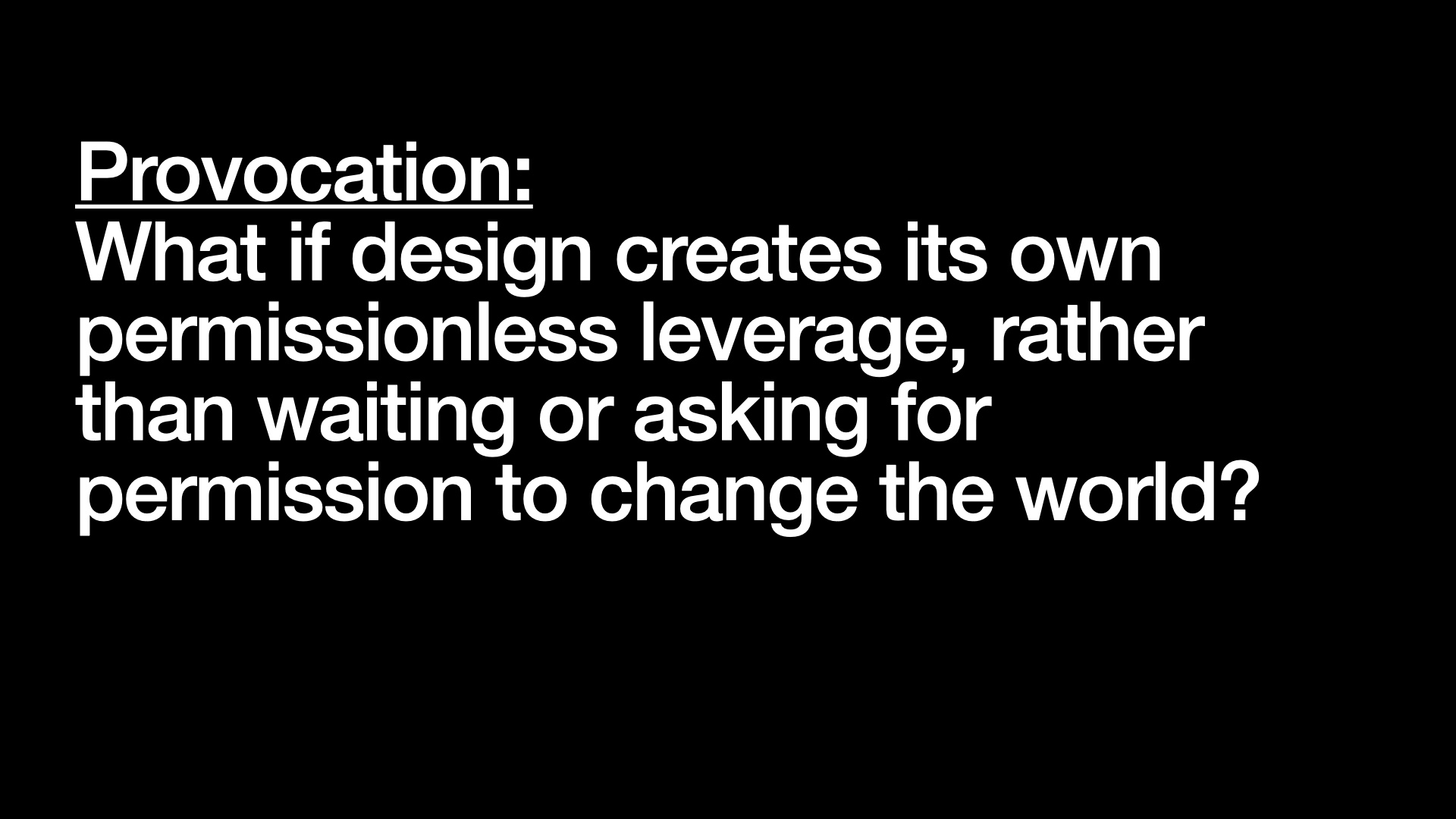 | Since a superpower of design is the ability to make things, what if design creates its own permissionless leverage? What if we just make it? # |
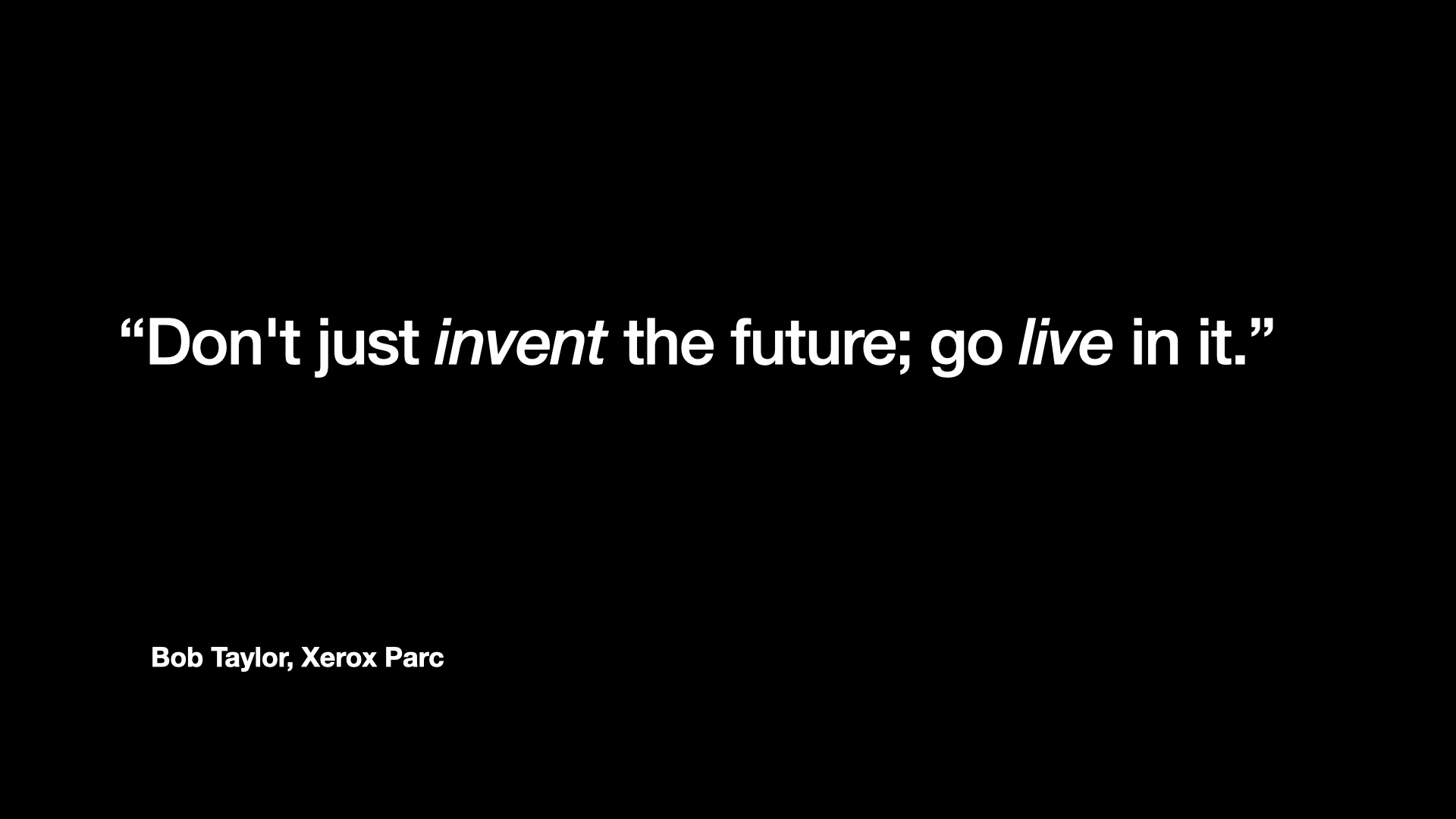 | Maybe that’s something we can learn from Xerox Parc, which did change the world, even if Xerox didn’t succeed. And how Xerox Parc did so, stemmed in large-part from this man and his quote. Bob Taylor nudged the Parc folks to actually use the stuff they invented. # |
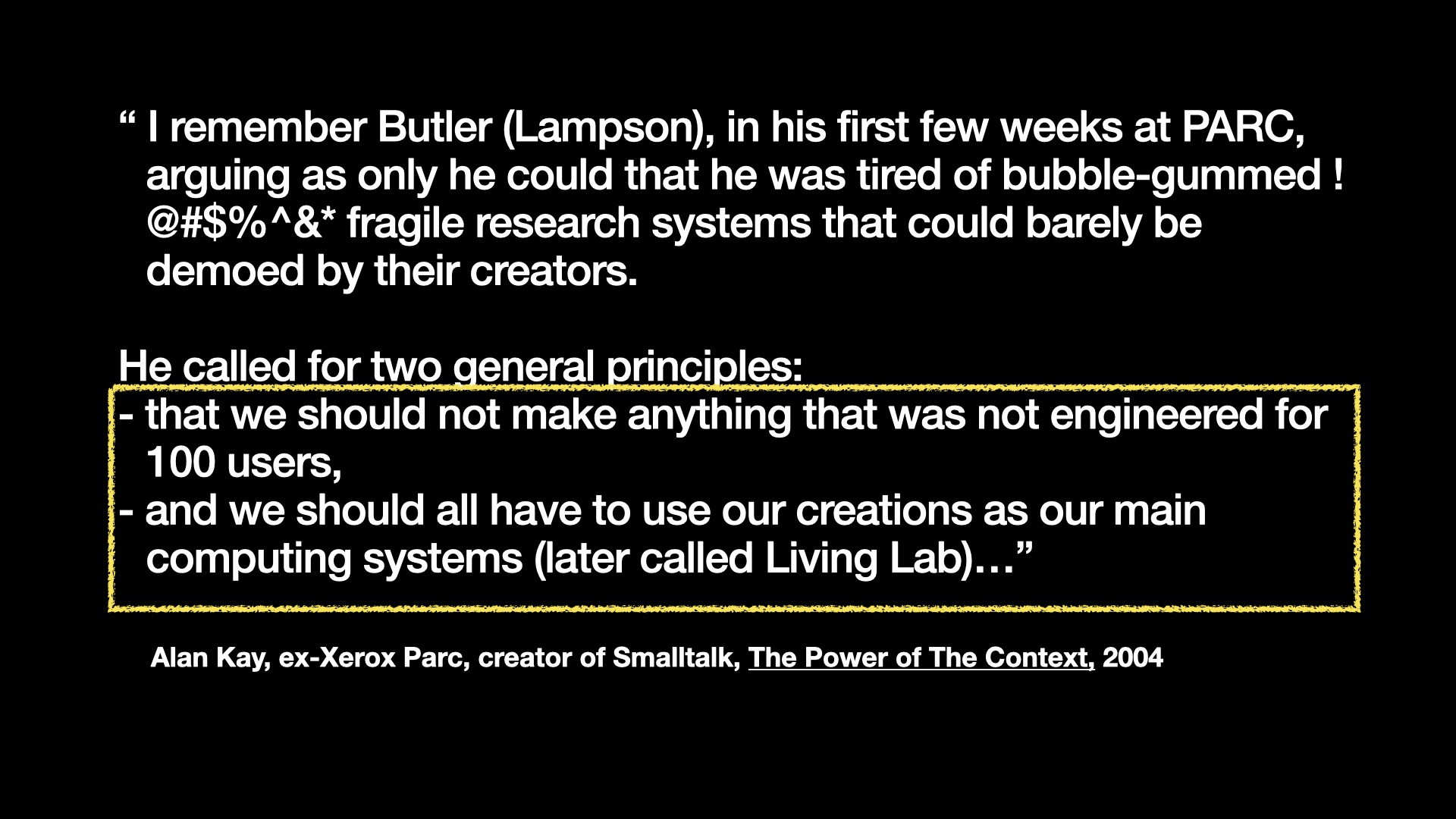 | … and Alan Kay also credits Butler Lampson for pushing the Parc team to engineer products for 100 users, and to use their own creations directly. # |
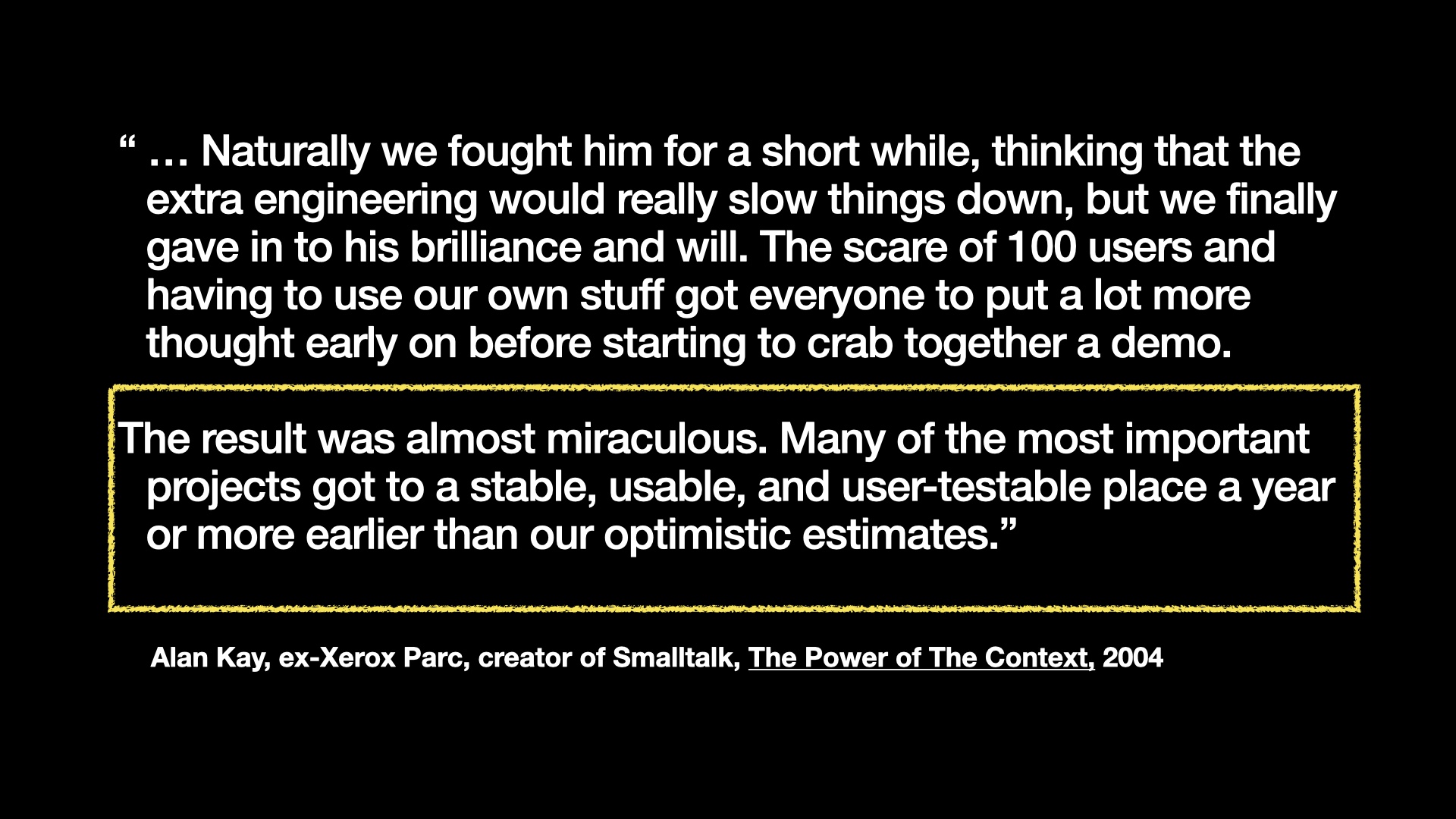 | … which, Alan Kay claims, is the reason why many of their most important projects became stable, usable and user-testable ahead of schedule, due to the very tight & direct feedback loops. The key message here is, it is now a LOT easier to use AI tools to make stuff used by others. # |
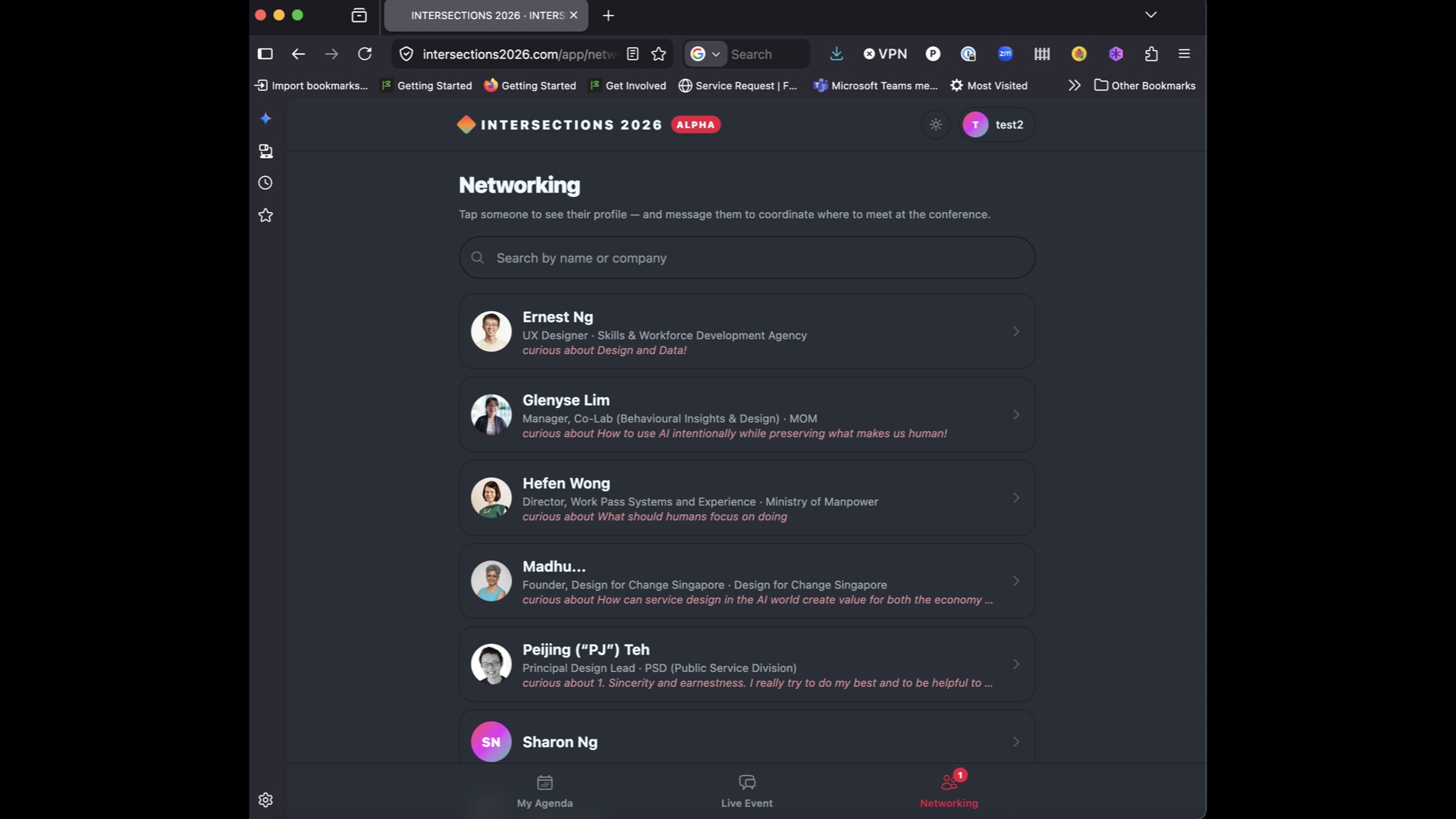 | … like making this app in 10 days. # |
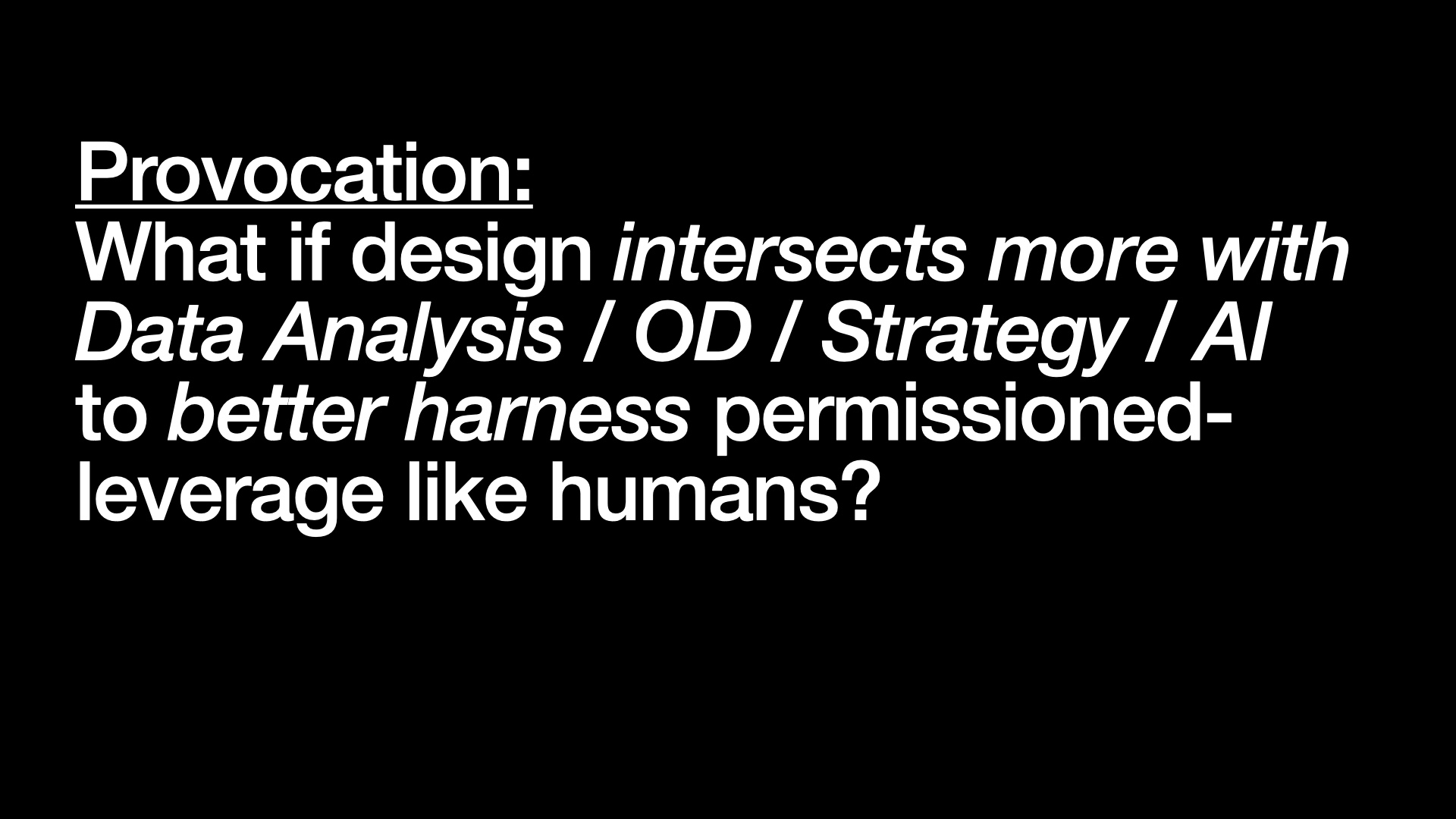 | My 2nd provocation has to do with permissioned-leverage. How do we better harness permissioned-leverage like human labour/ And maybe this is where design needs to intersect more with other domains: data analytics, organisation development, strategy, and AI tools, so that we can better unleash human potential. # |
 | And to that end, I thought it might be interesting to bring in the two other speakers today for our dialogue session: - Isaac Tay is VP of Product at Shopback, and he is going to talk about how product management looks like in the AI age - that you now have product builders, with the convergence of designers, product managers, and data analysts - Jensen Loke is CEO of SuccessIT, and will talk about automating workflows, but discovering that you NEED the human in the loop, especially to deal with other humans in other organisations. He will also cover I don't know for sure what will happen next, but I hope that the talks by the 3 of us will help give you some hope and ideas. Please feel free to share later after Jensen finishes his talk, and we will have a fishbowl-style dialogue. # |
 | Thank you, and thanks to all these people I have chatted with over the years about AI, who have helped me sharpen my thinking and ideas around them. # |